A uniform can look sharp on a hanger and still fall short on the job. Creating a professional look with company uniforms takes more than placing the same logo on every garment. The pieces should feel connected, suit the work, and help employees represent your brand with confidence. To avoid a design that looks inconsistent across apparel or puts appearance ahead of comfort, plan the garments and branding together.
This guide walks through the decisions that make a uniform program more cohesive and practical. Set clear brand goals, match apparel to different roles and settings, and check that logo use is consistent across garments. Then bring the decisions together in a process that covers artwork, wearer feedback, and production details. For organizations in North Texas, including Plano, Frisco, Dallas, Wylie, Sherman, The Colony, Melissa, and Richardson, thoughtful planning can help create a polished team identity without making the uniforms feel generic.
Key Takeaways
- Decide what the uniforms should communicate, then choose apparel that fits the brand, workplace, and people wearing it.
- Creating a professional look with company uniforms starts with clear brand references and wearer needs, not just a garment or logo choice.
- Check logo visibility, color consistency, role fit, and everyday usability before approving an order.
- Prepare your artwork, role requirements, and estimated quantity to make the move from uniform ideas to a coordinated apparel program easier.
Why company uniforms shape a professional first impression
Employees represent your organization in different roles and everyday interactions. A receptionist welcomes visitors, a field team meets customers on-site, and staff members answer questions at an event. If their apparel looks unrelated, the team can seem less cohesive. Creating a professional look with company uniforms starts with a shared visual foundation that still makes sense for each person’s work.
Professional company uniforms are coordinated apparel that reflects the brand, suits the workplace, and works for the people wearing it. The focus is not simply on matching garments. The history and psychology of uniforms helps explain how uniforms can signal identity and shared purpose. A consistent appearance can support brand recognition and create a more coherent customer experience, without guaranteeing a particular response.
What makes a company uniform look polished?
A polished uniform treats color, logo placement, and garment selection as parts of one visual system. Items do not have to be identical across every role, but they should look as though they belong to the same organization. For example, customer-facing employees might wear branded polos while field staff wear a different style suited to their tasks. Shared colors and consistent logo treatment can connect the two groups.
Keep the logo clear and legible on each garment. Check its size and placement against the available space, and avoid adding design elements that compete with it. A simple, well-positioned mark is often easier to recognize than a crowded design.
Who benefits from a coordinated uniform program?
Customer-facing staff can be easier for visitors to identify, while field teams can present a connected brand image at customer sites. Schools and community organizations may use shared apparel to express belonging. Sports programs can build a recognizable team identity; explore sports uniforms as one example. For each group, weigh the organization’s identity against the setting and the needs of the people who will wear the apparel.
How to design company uniforms around your brand and team
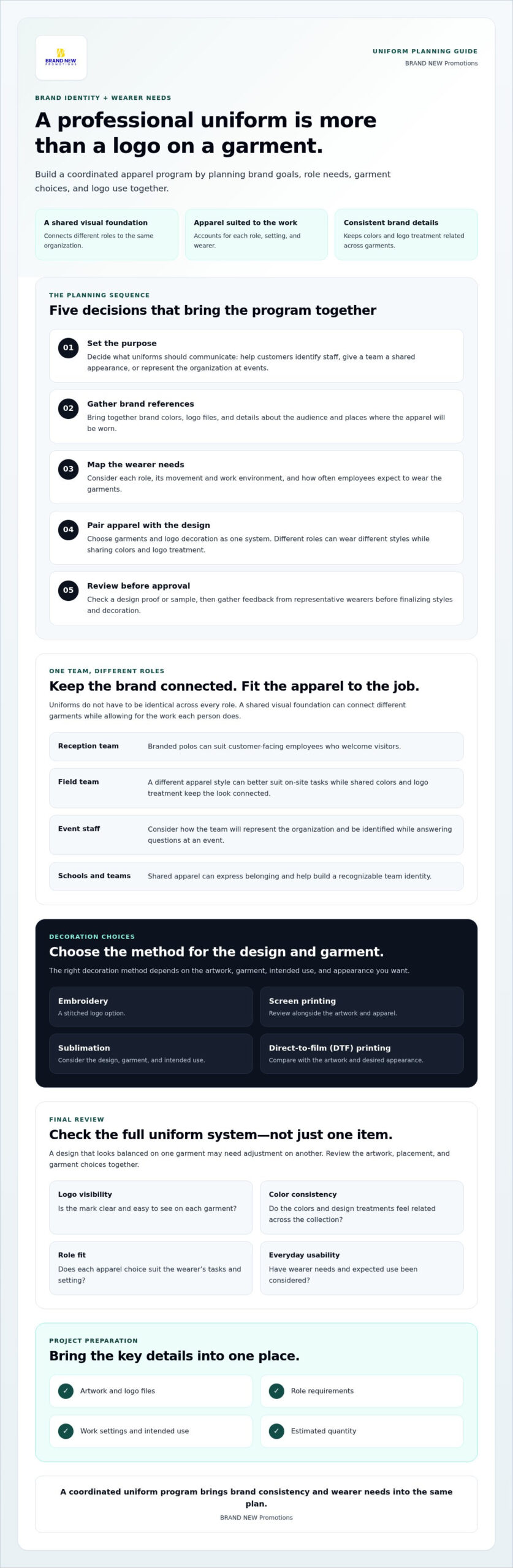
Start by naming the purpose of the uniforms. You might want customers to identify staff, give a team a shared appearance, or represent your organization at events. Gather your brand colors, logo files, intended audience, and details about where the apparel will be worn. These references help keep design decisions focused.
Next, describe what wearers need. Consider each role, how much movement it involves, the work environment, and how often employees expect to wear the garments. A front-desk team and an active field crew may need different apparel, even when both should look connected to the same brand.
Good uniform design connects brand consistency with practical employee needs. Use that principle to guide garment and decoration choices. Before placing an order, review a design proof or sample to see how the logo, colors, and layout work on the chosen apparel. Check each garment type, since a design that looks balanced on one item may need adjustment on another.
How should teams balance brand guidelines and employee needs?
Ask a few representative wearers to review the options before finalizing styles or decoration. Their feedback can surface practical concerns that are not apparent in a design file. Keep a consistent core, such as shared brand colors and logo treatment, while allowing role-specific apparel when tasks or settings differ. This approach aligns the team without requiring everyone to wear the same garment.
Which logo decoration method fits the design?
Embroidery, screen printing, sublimation, and direct-to-film (DTF) printing offer different ways to apply a design. The right method depends on the artwork, garment, intended use, and appearance you want. For a stitched logo, explore custom embroidery services. If the program includes several garment types, review the design and apparel together with your provider before choosing a decoration method.
Creating a professional look with company uniforms is easier when brand goals and wearer input guide each decision. To organize the project, start planning your apparel project with your artwork, role requirements, and work settings in mind.
How to make company uniforms consistent, comfortable, and usable
A uniform program should work across roles without losing its connection to the brand. Before approving the order, review the artwork, placement, and garment choices together. Check that the logo remains easy to see on each item and that the colors and design treatments look related across the collection.
Review the uniform system as a whole, not item by item. Looking across the full set can help you catch differences in color or logo treatment, while still leaving room for teams to wear apparel suited to their work.
What should a company uniform review checklist include?
- Brand match: Do the logo files, colors, and placement follow your brand guidance?
- Visibility: Is the logo easy to see and read on each garment?
- Role fit: Does the apparel suit each team’s tasks, work setting, and movement?
- Everyday use: Have wearers considered how the garments feel and function during a typical workday?
Gather feedback from people in different roles, then compare the final artwork and garment choices side by side. Browse company apparel options as you consider which pieces can work together.
How can teams avoid a disconnected or overly formal look?
Consider a company with staff at a reception desk and a field team visiting customer sites. The reception team may need a polished look for regular face-to-face contact, while field staff need apparel suited to active work. Shared brand colors and consistent logo use can connect both groups without requiring identical garments.
Uncoordinated colors, different logo versions, or decisions made without wearer feedback can weaken that connection. Creating a professional look with company uniforms means balancing a clear brand presence with apparel that people can wear comfortably in their roles. For a shirt-focused example, see guidance on custom shirts for professional branding.
To bring uniform ideas together, start planning your branded apparel with your team’s needs and brand references in view.
Moving from uniform ideas to a coordinated apparel program
A clear process helps keep a uniform project organized from the first conversation through ordering. Begin with your goals and wearer input. Then review artwork, select a decoration method, approve the design, and confirm order details. Working through these steps helps connect the impression you want to create with apparel that makes sense for the team.
What should teams prepare before requesting uniform support?
Gather your logo artwork, brand references, preferred garments, wearer groups, and estimated order quantity. Note where the uniforms will be worn, such as customer visits, events, or field work. Include project timing and role-specific needs so the design discussion can start with useful context. Teams and athletic programs can also explore custom sports uniforms.
Before approval, review how the artwork and decoration will look on the selected garments. Confirm project details and any bulk order requirements directly with your apparel provider, since they can vary by project.
How can a branding partner help bring the look together?
A branding partner can help connect your visual direction, garment choices, and decoration method in one coordinated plan. BRAND NEW Promotions works with organizations on graphic design and branding, as well as custom apparel decoration through embroidery, screen printing, sublimation, and DTF printing. This gives teams a way to consider their brand and wearer needs together while planning custom apparel.
Creating a professional look with company uniforms is easier when artwork, wearer needs, and production details are considered together. Bring those materials and questions into an initial discussion, then work through design and approval before ordering.
Ready to discuss a coordinated apparel project? Start a conversation with BRAND NEW Promotions.
Build a Uniform Program Your Team Can Wear with Confidence
Creating a professional look with company uniforms takes more than matching garments. Set a clear brand direction, consider what employees need in their roles, and review artwork, placement, and apparel together before approving an order. For organizations in North Texas, including Plano, Frisco, Dallas, Wylie, Sherman, The Colony, Melissa, and Richardson, this coordinated approach can help create a consistent identity while keeping uniform choices practical for the workday.
The right customization method depends on your design and apparel. BRAND NEW Promotions offers graphic design and branding support alongside embroidery, screen printing, sublimation, and DTF printing. These options let organizations consider how their logo and visual direction will appear across custom apparel.
Ready to turn your ideas into a coordinated apparel project? Start planning a company uniform project with BRAND NEW Promotions. Bring your artwork, garment needs, and estimated quantity to begin planning a branded look for your team.
Frequently Asked Questions
Is a company uniform necessary for a professional appearance?
No, not every organization needs a formal uniform. Coordinated apparel can help a team present a consistent look and make staff easier to recognize. Start by deciding how you want customers, employees, or event attendees to see your organization. Then identify which roles would benefit from shared apparel and choose a level of coordination that fits your workplace and team.
How do you make company uniforms look professional?
Creating a professional look with company uniforms starts with a clear brand direction. Coordinate colors, logo use, garment choices, and decoration while keeping the work setting in mind. Ask representative employees for input, then review the full design before production. A consistent visual system can look more polished than a design crowded with extra elements. Check that each garment supports the same overall impression.
What should you consider when choosing uniforms for employees?
Consider each employee’s tasks, work setting, movement, comfort, and level of customer contact, along with your brand guidelines. A customer-facing employee may need a different garment from a field worker, while both can share brand colors and logo use. For North Texas organizations in Plano, Frisco, Dallas, Wylie, Sherman, The Colony, Melissa, and Richardson, collect wearer feedback and confirm artwork before placing a bulk order.
Which logo method is best for company uniforms?
There isn’t one best method for every project. Embroidery, screen printing, sublimation, and DTF printing can each suit different artwork, garments, and intended uses. BRAND NEW Promotions works with organizations on custom apparel and branding in North Texas. Compare the design and garment together, then discuss which decoration method fits your goals. Review the final appearance and project details before approving the order.