A merch budget is easier to approve when it supports a clear company goal, reaches the right people, and fits the campaign calendar. Knowing how to get budget approval for branded merch starts with the business need, not a list of products. Plan for production too: most branded merchandise takes two to four weeks from approval to delivery.
Build a clear case before asking finance or leadership to commit funds. Tie the request to an outcome decision-makers care about, such as stronger employee engagement, a more memorable event, or better client relationships. Show who will receive the merchandise, when they’ll use it, and how you’ll assess whether the campaign worked.
Focus your request on three things: connect merchandise spending to company goals, plan around timing and recipient counts, and address questions about value, scope, and results. A clear proposal gives decision-makers the context to assess the investment and helps you choose branded merchandise that serves a real business purpose.
Key Takeaways
- Start with the business outcome, then choose merchandise that fits the purpose and the people it should reach.
- Map campaign dates and recipient counts to create a realistic request with clear scope.
- Address decision-makers’ concerns by showing how the request fits team priorities and spending oversight.
- Build a concise business case with measures that match the campaign, so results are easier to review.
1. Aligning merch budgets with company goals
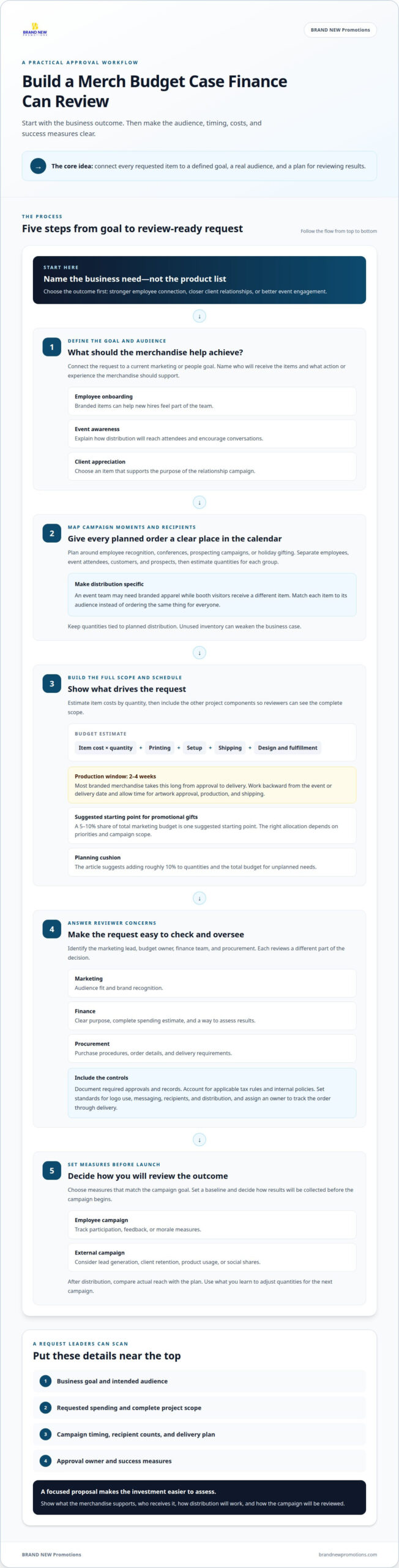
Start with the business need, not a product list. Name the desired outcome first: stronger employee connection, closer client relationships, or better event engagement. Then identify the audience and the action you want merchandise to support. For example, custom shirts for a volunteer team can build a shared identity at a community event, while a client gift can support an appreciation campaign. Choose each item to fit its purpose.
Connect the request to an existing marketing or people goal. If the priority is employee onboarding, explain how branded items can help new hires feel part of the team. If the goal is event awareness, show how distribution will reach attendees and encourage conversations. A 5-10% share of a company’s total marketing budget is one suggested starting point for promotional gifts, but the right allocation depends on priorities and campaign scope. A practical answer to how to get budget approval for branded merch is to link each requested item to a clear business outcome.
For US tax, legal, and brand compliance, account for applicable tax rules and internal approval policies before committing to a campaign. Set standards for logo use, messaging, recipients, and distribution so each item represents the organization consistently—often drawing on clear brand guidelines developed with creative agencies like LYFE Studio. Document who approves the design and oversees distribution to keep the review process clear.
Estimate the full project scope by listing product quantities, design or setup work, shipping, and fulfillment needs. Then organize costs by component, so decision-makers can see what drives spending. Keep inventory and distribution aligned with the approved audience; unused quantities can weaken the business case.
Choose ROI measures that match the goal. For an employee campaign, track participation, feedback, or morale measures. For an external campaign, consider lead generation, client retention, product usage, or social shares. Set a baseline and decide how you’ll collect results before launch.
A focused request might propose shirts for event staff, explain how they create a consistent welcome, and measure attendee engagement afterward. That is easier to assess than a request for merchandise with no defined audience or outcome.
2. Budgeting by campaign moment and recipient count
Build the request around the campaign calendar, not one large, unexplained merch order. Map employee recognition, conferences, prospecting campaigns, and holiday gifting across the year. Each occasion has a different audience and message. An employee welcome kit can reinforce belonging, while event apparel can help staff look consistent and easy to identify.
How much should companies budget for branded merchandise? There’s no single amount that fits every campaign. Estimate the total by multiplying the cost per item by the quantity, then adding printing, setup, shipping, design, and fulfillment expenses. This objective-and-task method ties spending to a defined purpose and recipient count.
Start by identifying who will receive each item. Separate employees, event attendees, customers, and prospects, then estimate quantities for each group. An event team may need branded apparel, while booth visitors receive a different item. Targeted distribution avoids ordering the same item for everyone and makes the campaign more relevant.
Set the campaign date before finalizing the schedule. Work backward from the event or delivery date to allow time for artwork approval, production, and shipping. Apparel and printing choices can affect the production plan—or require quick-turnaround services like printbox.london when deadlines are tight—so include those details in the request. Keep inventory tied to planned distribution, rather than ordering extra stock without a clear use.
A practical annual plan can include a separate line for each campaign, its recipients, quantities, purpose, and delivery date. Add roughly 10% to quantities and the total budget as a cushion for unplanned needs. Track actual distribution afterward. If the employee campaign reaches fewer people than planned, adjust the next order instead of repeating the same quantities.
Use the finished schedule to make the request easy to review. A campaign planning starting point can help organize the timing, apparel, and printing decisions around your goals.
Bulk promotional orders can lower the cost per unit.
3. Identifying decision-makers and their concerns
A branded merchandise request may involve the marketing lead, budget owner, finance team, and procurement. Each reviews a different part of the decision. Marketing considers audience fit and brand recognition. Finance needs a clear purpose, complete spending estimate, and way to assess results. Procurement focuses on purchase procedures, order details, and delivery requirements. Map these roles before submitting the request.
Company merchandise purchases follow the organization’s procurement and approval policies. These may cover who approves spending, how orders are documented, and which purchasing steps apply. Include the required approvals and records in your proposal, and assign an owner to track the order from approval through distribution.
Ordering too much can leave inventory unused if demand or recipient counts change. Low-quality promotional items can also create a poor impression if the logo, fabric, or printing wears quickly. Match quantities to the audience and campaign, then explain how the selected product quality supports a lasting, professional brand impression.
Make the proposal easy for finance and leadership to scan. Put the goal, audience, requested spending, timing, and success measures near the top. Then explain how the item supports the campaign, who receives it, and how distribution will be managed. For example, a screen-printed event shirt might help staff stand out, while post-event feedback can show whether attendees noticed the team.
Address likely concerns with clear, relevant details. A marketing leader may ask whether the message fits the brand. Finance may want a realistic estimate and a way to track outcomes. Procurement may need quantities, specifications, and timing. Keep the approved scope consistent across those details, including the fabric, decoration method, and intended recipients.
Close with a simple accountability plan. Name who approves artwork, oversees the order, distributes items, and reports results. Clear roles help prevent confusion between approval and execution. A focused request turns promotional merchandise into a planned business activity, not an unexplained purchase.
Follow your organization’s rules for spending approval, order documentation, and purchasing. Include required approvals and records in the proposal, and assign someone to oversee the order from approval through distribution.
4. How to build a business case for branded merchandise budget approval?
Make the proposal easy for leadership to scan. Open with the business goal, intended audience, requested spending, campaign timing, and decision needed. Organize supporting details beneath that summary so finance can review the request without searching through product descriptions or unrelated campaign plans.
Choose measures that fit the purpose. For employee recognition, track participation, feedback, or morale. For a customer campaign, consider lead generation, client retention, or follow-up engagement. Set a baseline and name who will collect the results. These steps make the request easier to evaluate and help teams review what worked after distribution.
Use industry data as context, not as a promise of results. The Advertising Specialty Institute reports that promotional products can have a cost per impression as low as one-tenth of a cent. Explain that this figure describes potential exposure, then show how your campaign will track its own reach and response.
Make the spending estimate realistic and easy to understand. Separate merchandise, design, printing, shipping, and fulfillment so reviewers can see what each part supports. Tie quantities to recipient groups and campaign needs. If a request includes more than one audience, show how distribution will differ rather than presenting one unexplained total.
For example, a trade show proposal could explain how branded apparel helps staff stand out, supports a consistent event experience, and creates opportunities for conversation. Measures might include booth interactions and leads captured. An employee recognition proposal needs different measures, such as participation and feedback. The use case should guide both the item and evaluation plan.
Close with the approval requested, the person responsible for tracking results, and the planned review point. This gives decision-makers a clear next step and creates accountability after approval. To shape a campaign around your goals, start planning your branded merchandise project.
BRAND NEW Promotions | Top Promo Supplier in North Texas: Custom Branded Hoodies
BRAND NEW Promotions | Top Promo Supplier in North Texas helps turn an approved merchandise plan into branded experiences that support recognition, engagement, and stronger relationships. Once your goals, audience, and campaign scope are clear, its promotional marketing expertise can help align merchandise choices with the purpose behind your request.
For employee recognition or client-facing events, embroidered polo shirts can create a polished, consistent look. Embroidery adds a finished branded detail, while other promotional products can support a campaign beyond apparel. The right choice depends on who will receive the items, where they’ll use them, and the impression your organization wants to leave.
Bring your campaign purpose, intended recipients, timing, and approval scope to the conversation. BRAND NEW Promotions can help shape those decisions into a cohesive branded merchandise project for your North Texas organization. Contact BRAND NEW Promotions to discuss your campaign.
Turn approval into a stronger next campaign
Approval is the start of a useful feedback loop, not the finish line. After the campaign, share what happened with the people who approved it: who received the merchandise, how it was used, and what the team learned. That record can guide future decisions and make the next request more focused.
Understanding how to get budget approval for branded merch also means planning for what comes after approval. BRAND NEW Promotions brings promotional products, promotional marketing, and embroidery together to help North Texas businesses put approved campaign plans into action. A clear creative direction can keep each brand touchpoint connected to the experience you want people to remember.
Ready to shape your next campaign around a meaningful business goal? Start a conversation with BRAND NEW Promotions and take the next step with confidence.
Frequently Asked Questions
How far in advance should I submit a company merch budget request?
Submit the request before internal approvals and production need to begin. Most branded merchandise takes two to four weeks from approval to delivery, so build that period into the campaign schedule. Allow extra time for budget review, artwork decisions, and distribution planning. For a fixed event date, work backward from the delivery deadline and submit early enough to handle each step.
How to estimate shipping, setup, design, and fulfillment costs for merch?
Estimate merchandise by multiplying the cost per item by the quantity, then add printing, setup, shipping, design, and fulfillment expenses. List each cost separately so decision-makers can see what drives the total.