A cohesive booth isn’t built by adding more graphics. It comes from making each branded surface work together. Dallas trade show booth materials such as counter wraps, podium graphics, branded panels, printed event assets, and banners can create a consistent look and help visitors recognize your brand. Each piece should support the same message and feel like part of one display.
It’s easy to focus on a backdrop and overlook the details visitors see up close. A mismatched counter wrap or outdated handout can make the booth feel less connected. Coordinating these elements creates a more polished experience without crowding the space.
This article explains how to coordinate booth materials, what to consider when choosing display graphics, and how different pieces support visibility and visitor engagement. Layout, existing display hardware, travel needs, and brand goals can all shape the right choices for your Dallas event.
Key Takeaways
- Coordinate banners, counter wraps, panels, and printed pieces around one clear brand message for a more unified booth.
- Choose display materials based on your hardware, travel needs, setup conditions, and the finish you want.
- For indoor events, prioritize graphics and structures that suit the venue, fit the booth layout, and keep your message easy to see.
- Use a retractable banner to give your brand a focused, portable presence when a clear visual anchor would support the display.
Banners
A banner can make your booth visible before visitors reach the counter. For a 10×10 setup or larger, coordinate its scale with the booth layout, neighboring spaces, and the main visitor path. A large backdrop can establish your brand, while a smaller banner can focus attention on one offer or message. Match its colors and graphics to your corporate identity so the presentation feels connected, not assembled from separate pieces.
Keep the message simple: use a clear headline, one main image, and a readable call to action. Visitors may see banners from across a convention floor, so small text and crowded details can weaken the message. For example, a company introducing a service could lead with its name and a short benefit, then use counter graphics for supporting information.
Plan banner placement around height and sightlines. Hanging banners or tall displays use vertical space, while a backdrop can define the booth’s central area. Leave room for people to enter, talk, and view products. Before ordering custom graphics, confirm the display hardware, measurements, setup conditions, and venue rules. This helps prevent artwork from being cropped or blocked by a table or rental fixture.
Reuse existing banners, brochures, and signage when their message still fits the event. If the hardware remains usable but campaign details have changed, replacement graphics can refresh the display without rebuilding the full package. For printed paper event materials, the U.S. Environmental Protection Agency recommends recycled paper with post-consumer content of preferably 50% or higher, printed with vegetable-based inks.
Review each banner alongside the booth’s other materials before the show. Check that logos, colors, product names, and contact details match across the backdrop, table cover, and handouts. A coordinated set helps visitors recognize your brand as they move through the space. If the message changes for a new convention, update the relevant details while keeping the broader visual system consistent.
What materials are commonly used for trade show booths in Dallas?
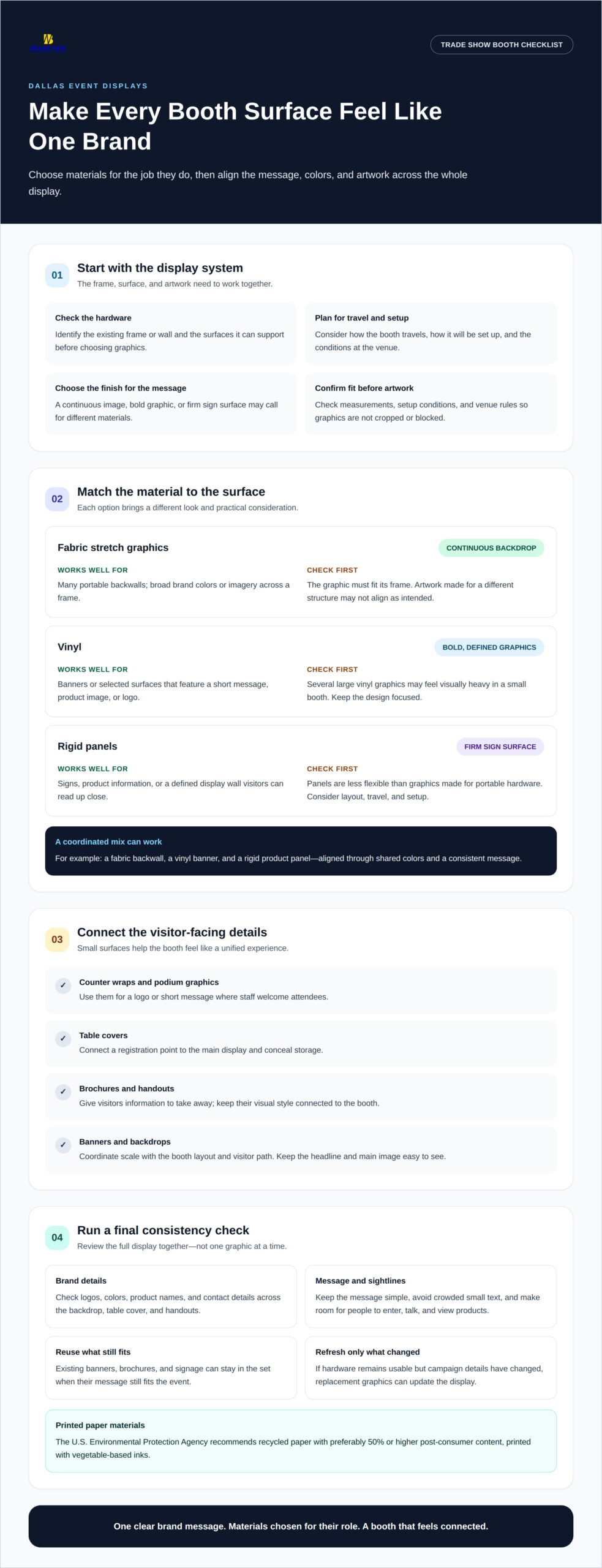
Choosing Dallas trade show booth materials starts with the display structure, travel needs, and intended finish. Fabric stretch graphics suit many portable backwalls, creating a continuous printed surface. Vinyl is another option for banners and graphic panels, while rigid panels provide a firm surface for signs or display walls. Choose based on how each piece fits the booth, not just how it looks in a sample.
Frames and graphic surfaces work as a system. A portable frame may support fabric graphics, while a fixed wall can use rigid panels. Vinyl graphics may suit components that need a smooth, wipeable surface. For example, a fabric backwall paired with a rigid product sign can keep the main display visually open while highlighting one key offer.
Smaller branded surfaces add function at visitor level. A table cover can conceal storage and connect a registration point to the main display. Counter wraps and podium graphics can carry a logo or short message where staff welcome attendees. Brochures and handouts give visitors information to take away. Use the same logo, colors, and message hierarchy across each piece, even when the materials differ.
Choose materials by matching each component to its job. First, identify the existing hardware and the surfaces it supports. Next, consider how the booth travels and how it will be set up. Then select a finish that fits the desired presentation and the level of detail in the artwork. Fabric can create a seamless backdrop; a rigid panel can make a sign feel defined. A coordinated display design plan can align these choices with your brand and event goals.
Spotlights, LED strips, and projection mapping can highlight booth features and create an inviting atmosphere. Consider the lighting alongside the selected materials and how you want to present them.
Tablets and smartphones can present products and services interactively at trade shows. They extend the booth’s presentation beyond printed graphics, giving visitors a hands-on way to explore what’s on display.
What are the pros and cons of fabric, vinyl, and rigid-panel booth displays?
Fabric, vinyl, and rigid panels each create a different display experience. The best fit depends on existing hardware, travel needs, setup conditions, and the finish you want. A portable backwall that travels between Dallas events has different needs from a fixed product display. Choose the material as part of the display system, not as a stand-alone graphic.
Fabric stretch graphics work well for many portable backwalls. They create a broad, continuous image across the frame, helping a company present one clear visual story. Fabric also suits designs built around large brand colors or imagery. The graphic must fit the frame correctly, however. Artwork designed for a different structure may not align as intended, so plan the hardware and artwork together.
Vinyl can deliver bold color and defined graphics on banners or selected booth surfaces. It works well for a short message, product image, or logo that needs to stand apart from the backdrop. Several large vinyl graphics may feel visually heavier than fabric in a small booth. A focused design, such as one headline with supporting imagery, helps the display feel less crowded.
Rigid panels create a firm, structured surface for signs, product information, or a defined display wall. They can give a booth a clean, organized look, especially when visitors need to read a key message up close. The tradeoff is less flexibility than a graphic made for portable hardware. Consider how panels fit the layout, travel, and setup process before choosing them.
Use a simple decision sequence: match the material to the hardware, consider how the display will travel, then choose a finish that supports the message. A portable fabric backwall, vinyl banner, and rigid product panel can work together. Align their colors, logo placement, and message hierarchy for a consistent Dallas booth.
What booth materials are best for indoor trade shows in Dallas?
For indoor events, choose booth materials that fit the floor plan, display hardware, and visitor flow. A fabric backwall can establish the main visual area, while a printed panel or banner highlights a focused message. The right combination depends on the booth footprint and what attendees should notice first. Venue requirements also affect setup, placement, and display height.
In a compact booth, prioritize a clear message and useful surfaces. A branded table cover can define the welcome point, while a small product display or seating area supports conversations. Avoid filling every open area with graphics or furniture. Visitors should be able to see the main message, approach staff, and understand where to engage without navigating around obstacles.
Use vertical space when floor space is limited. Shelving, display units, and hanging banners can lift key information above tables and product samples. Spotlights or LED strips can draw attention to a featured graphic or display. For example, a company showcasing a new product might use a focused panel at eye level and light the sample area instead of adding more text.
Plan the layout around entrances, exits, and obstacles. Place the main graphic where it’s visible from the aisle, then arrange tables and displays to guide visitors toward the conversation area. A demonstration station needs space for people to pause without blocking the entrance. For a smaller setup, prioritize product display, seating, and storage according to their importance.
Before production, align artwork with the display structure and the venue’s setup conditions. Keep logos, colors, and message hierarchy consistent across the backdrop, table cover, and printed handouts. Indoor events can use displays created in-house or materials sourced from local vendors. For a cohesive presentation, start planning your booth materials around the event layout and brand message.
Exhibitors can create their own displays or source materials from local vendors as options for booth design. Choose the approach that suits the planned design, then align the materials with the booth’s visual priorities and layout.
Before committing, decide which pieces the display needs and whether an in-house build or local sourcing better suits the setup. Either approach can support a cohesive presentation when the materials work together.
BRAND NEW Promotions | Strategic Branding Partner: Retractable Trade Show Banners
BRAND NEW Promotions is a strategic branding partner that helps you use Retractable Trade Show Banners to give your booth a clear, branded focal point. They work well when you need a dedicated space for a key message, product introduction, or event promotion. A banner can support the wider display without requiring every surface to carry the same information.
For a cohesive presentation, coordinate the banner artwork with your booth colors, logo, and other event materials. Keep the main message easy to scan, then use the surrounding display to add context. This helps visitors recognize your brand and understand what to notice. Retractable banners suit events where a focused vertical display supports your goals.
If you’re planning branded booth materials for an upcoming event, contact BRAND NEW Promotions, your strategic branding partner to discuss your project.
Turn Your Booth Into a Lasting Brand Connection
A cohesive plan for Dallas trade show booth materials can do more than make a display look polished. It can give visitors a clear first impression and help them remember your organization after the event. Think beyond the booth: connect the event experience with the conversations and brand touchpoints that follow.
That broader view can guide how promotional marketing, promotional products, and Embroidery support your event goals. Branded apparel can help staff look like a united team, while a useful giveaway can keep your message in view after attendees leave. Give each choice a purpose and use it to reinforce the same brand story.
Ready to shape your next event presence? Start planning with BRAND NEW Promotions, your strategic branding partner. A thoughtful plan can help your team create a booth experience that feels consistent, welcoming, and distinctly yours.