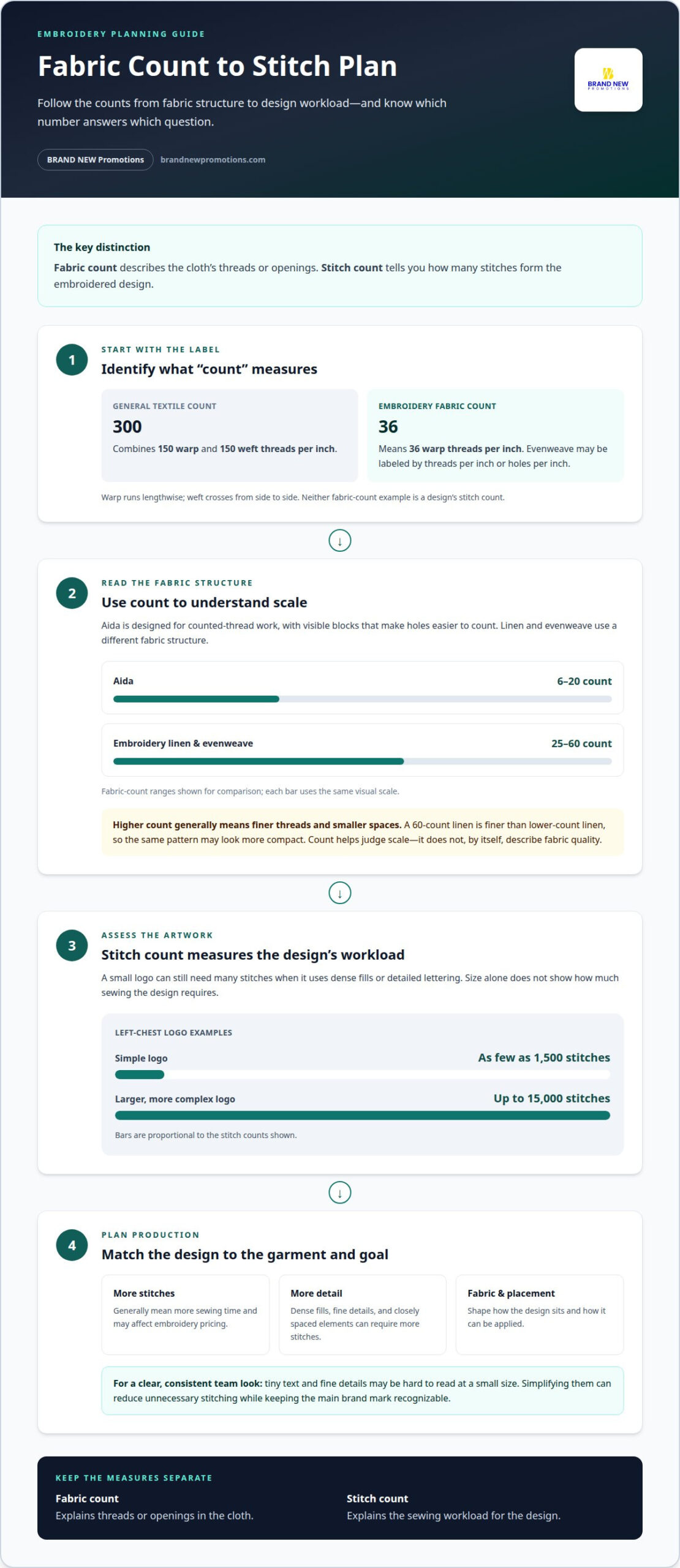
The word “count” can describe different things in embroidery. When asking what thread count means in embroidery, the answer usually depends on the fabric: its count describes the number of threads or holes measured across an inch. That’s different from embroidery stitch count, which is the number of stitches used to create a design.
It’s easy to mix these measures up, especially because everyday textiles use thread count differently. A 300-count fabric generally has 150 warp threads and 150 weft threads per inch, while embroidery fabric described as 36 count has 36 warp threads per inch. Evenweave fabrics may also be labeled by threads per inch or holes per inch.
Knowing which count you’re looking at helps you understand how fabric is woven and how a design may fit its surface. This guide explains how fabric count is measured, how it differs from stitch count and textile thread count, and why the distinction matters when choosing fabric for embroidery.
Key Takeaways
- Fabric count describes the weave or openings in embroidery fabric, while stitch count refers to the stitches that form a design. Knowing which measure you’re reading helps you make sense of a pattern or production estimate.
- Fabric choice affects how detailed and dense an embroidery design can look. Match the fabric’s structure to the design and the finish you want.
- More stitches can mean more embroidery time and influence cost because dense or complex logos take longer to sew. Design detail and coverage are key factors.
- For branded apparel, embroidery can help create a consistent, polished team or workplace identity. BRAND NEW Promotions offers embroidery for projects such as embroidered polo shirts.
What is the difference between embroidery thread count and fabric thread count?
The word “count” has different meanings in textiles and embroidery. To understand what thread count in embroidery means, first identify what the number measures. In general bedding fabric, thread count combines warp and weft threads in a square inch. In embroidery fabric, count often describes the threads or holes measured along an inch. Stitch count is different: it records the stitches used to make a design.
Warp threads run lengthwise through woven fabric. Weft threads cross them from side to side. A general textile labeled 300 count has 150 warp threads and 150 weft threads per inch. The label adds those two directions together. It does not mean 300 threads run in each direction, and it does not describe stitches sewn into the cloth.
Embroidery fabric uses a different counting convention. A 36-count fabric has 36 warp threads per inch, rather than a combined 36 threads across both directions. Evenweave fabric has the same number of threads across its warp and weft in a given area. It is often labeled by threads per inch or holes per inch, and either measure may be called the fabric’s count.
These measurements help explain how a pattern relates to the fabric’s structure. Counted-thread embroidery uses the weave as a guide. The stitcher counts the warp and weft threads, then places the needle between them rather than piercing them. Evenweave has evenly spaced threads, so counting in both directions helps create regular stitches and a balanced pattern.
Aida fabric is designed for counted-thread work, including cross stitch and blackwork. Its visible blocks make holes easier to count than on most evenweave fabrics. Aida commonly ranges from 6 to 20 count. Embroidery linen and evenweave fabrics usually range from 25 to 60 count. These ranges describe fabric construction, not how many stitches a finished design contains.
Higher fabric count generally means finer threads and smaller spaces. For example, 60-count embroidery linen is finer than lower-count linen. Its smaller threads allow a smaller design. The same pattern may therefore appear more compact on finer fabric, while a lower count gives stitches more visible space. Fabric count helps you judge scale, but it doesn’t alone describe fabric quality.
Other needlework fabrics show why the label needs context. Needlepoint and rug canvas ranges from 3 count to 88 count. A count of 3 and a count of 88 describe very different structures, even though both use the word “count.” Silks may have a count above 200, another example of how the term varies across textile types.
- General textile count: A 300-count fabric combines 150 warp and 150 weft threads per inch.
- Embroidery fabric count: A 36-count fabric has 36 warp threads per inch.
- Evenweave measurement: Labels may state threads per inch or holes per inch.
- Stitch count: This is the number of stitches used to form the embroidered design.
For branded apparel, fabric construction matters because it affects how an embroidered design sits on the material. A fabric-count label is not the same as the design’s stitch count, so the two numbers answer separate questions. That distinction helps guide conversations about size, detail, and placement. For project-specific embroidery services, the fabric and artwork are considered together to support a clear, cohesive result.
Does embroidery thread count affect cost and production time?
Fabric count and embroidery stitch count measure different things, so they affect planning in different ways. Fabric count describes the cloth’s weave; stitch count measures how many stitches make up the design. For production time and cost, stitch count is the more direct factor. A logo with more stitches takes longer to embroider than a simpler design.
A small logo can still have a high stitch count if it uses dense fills or detailed lettering. For example, a simple left-chest logo can require as few as 1,500 stitches. A larger, more complex left-chest logo can require up to 15,000 stitches. Those figures show why the visible size alone doesn’t tell you how much sewing a design needs.
More stitches require more needle movements to form the artwork. That added sewing time is one reason embroidery pricing may be based on stitch count. The design itself matters: filled shapes, fine details, and closely spaced elements can require more stitches than open outlines. A logo with fewer stitches may take less time, even if it covers a similar area.
Fabric count can matter during design planning, but it doesn’t replace stitch count when estimating embroidery work. A finer fabric may suit a smaller, detailed pattern, while a different weave can change how the design sits. The production estimate depends on the artwork and the work it requires, not simply the fabric’s threads or holes per inch.
Stitch count is useful, but it isn’t the only factor in a practical production estimate. Artwork complexity affects how densely a design must be stitched, while placement and fabric shape how it can be applied. For example, a detailed emblem on a polo shirt may need a different treatment from a simple outline on a cap. The goal is clarity, not extra stitches without purpose.
For a team order, a consistent logo can create a unified look across shirts or caps. But tiny text and fine details may be hard to read at a small size. Simplifying them can reduce unnecessary stitching while keeping the main brand mark recognizable. The right balance depends on the design’s purpose, the garment, and the viewing distance.
- Stitch count: Indicates the number of stitches that form the embroidered design.
- Design complexity: Dense fills and fine details can require more stitches than open outlines.
- Fabric count: Describes the fabric structure, not the number of stitches in a logo.
- Artwork decisions: Simplifying small details can help preserve legibility and avoid unnecessary stitching.
Cost depends on the specific design and production factors, including stitch count, complexity, placement, and fabric. You can request a quote by sharing the artwork and intended garment. That information helps shape the project around your goal, whether it’s clear logo visibility on staff uniforms or a consistent team identity across apparel.
For a branded apparel project, a useful next step is to share your project details. That gives the embroidery planning a practical starting point, including the artwork, garment, and intended use. A clear design brief helps keep the focus on readable branding and a consistent finished look.
When reviewing an embroidery estimate, ask how stitch count affects the pricing. Embroidery may be priced by stitch count because logos with more stitches take longer to sew. The count is useful to discuss if dense fills or fine details seem unnecessary for the design’s purpose. Rather than judging an estimate by the logo’s visible dimensions alone, consider whether the stitching supports the clarity and appearance you need.
Simplifying a design without losing its recognizable features may reduce stitching and make production more straightforward. Discuss the artwork and intended placement with the embroidery team before finalizing the design, so the estimate reflects what you want embroidered. A practical choice balances the desired detail with the sewing the artwork requires. The goal isn’t to minimize stitches at any cost, but to avoid paying for detail that doesn’t help the finished logo communicate clearly. A stitch-count estimate is most useful when considered alongside these design choices.
BRAND NEW Promotions | Top Promo Supplier in North Texas: Embroidery
BRAND NEW Promotions | Top Promo Supplier in North Texas helps businesses and organizations turn embroidery artwork into branded apparel with a consistent, professional look. Whether you’re planning apparel for staff, a team, or an event, the design, garment, and intended use all matter. A clear logo helps people recognize your organization wherever they wear it.
Embroidery gives items such as polo shirts a polished, textured finish. It can support employee identity, team pride, and consistent branding across a group. Share your artwork and apparel goals with BRAND NEW Promotions to develop a design suited to your project and keep the finished branding clear.
Planning branded apparel? Contact BRAND NEW Promotions | Top Promo Supplier in North Texas to discuss embroidery for your team or organization.
Plan Apparel That Carries Your Brand Forward
Think beyond the garment itself. Consider where people will wear it and what experience it should support, such as welcoming new employees, building team spirit, or helping event staff stand out. A clear purpose can make apparel part of a broader brand experience rather than a standalone item.
Before moving ahead, align the apparel concept with the campaign’s visual style and audience. Consider how people will recognize the team, feel included, or remember the event. This wider view helps connect apparel to the relationships and impressions your organization wants to build.
If you’re ready to shape a branded apparel project around your goals, share your project details with BRAND NEW Promotions | Top Promo Supplier in North Texas. A thoughtful plan can help your team create a consistent experience people feel proud to be part of.
Frequently Asked Questions
What does Count mean?
“Count” only makes sense in context. Before using the number, look for nearby terms such as fabric, holes, threads, or stitches. For a counted pattern, the stated count helps determine whether the design will appear at its intended scale. If a label gives no context, avoid comparing its number directly with the count of another textile.
What does thread count mean in embroidery?
The phrase can refer to a fabric measurement used when planning needlework. For an embroidered apparel logo, the practical questions are different: will the artwork remain clear at its chosen size, and will it suit the garment? For example, tiny lettering may be hard to read on a small chest logo, even when the artwork is carefully prepared.
How is embroidery thread count measured?
Lay the fabric flat and place a ruler along a clear section, away from a fold or seam. Count the visible threads or openings across the measured span, then check another section to see whether the weave appears consistent. Turn the ruler perpendicular to the first direction and repeat. This gives you a better picture of the fabric than checking just one small area.