Screen printing often offers better value for larger orders that repeat the same simple design. Heat transfer can be a better fit for small batches, detailed artwork, and personalized names or numbers. The right choice also depends on your fabric, print size, and how the clothing will be used.
Consider two orders: 200 event shirts with one shared logo and 15 staff shirts with a different name on each. Both need a professional finish, but the most practical production method may be different.
This guide compares screen printing vs heat transfer so you can choose an approach that suits the finished garment and your budget.
Screen Printing vs Heat Transfer: Key Differences at a Glance
The main difference is how the design reaches the garment. Direct screen printing applies ink through a stencil onto fabric. Heat transfer applies a prepared design using heat and pressure.
| Consideration | Direct screen printing | Heat transfer |
|---|---|---|
| Best starting point | Larger runs with the same logo and a manageable ink-color count | Small batches, full-color artwork, or individual names and numbers |
| Setup | Screens must be prepared and aligned | A transfer must be produced or sourced, then heat-applied |
| Cost | Setup is spread across the order, often improving value at volume | Often practical for short runs; material and pressing costs still apply |
| Detailed artwork | Possible with suitable separations and printing techniques | Digital transfers such as DTF simplify full-color reproduction |
| Personalization | Changing every garment’s artwork adds production work | Names, numbers, and individual variations are easier to accommodate |
| Soft feel | Water-based ink can provide a soft finish on suitable fabric | Thin transfer materials can feel flexible; large solid designs add coverage |
| Durability | Suitable for repeated wear when ink and curing match the garment | Professional transfers can last well when material and pressing match the garment |
| Fabric choice | Match ink and curing conditions to the fabric | Match adhesive, application temperature, and stretch to the fabric |
“Heat transfer” describes a family of methods. Ask which technology your quote includes before comparing it with screen printing.
What Is Screen Printing, and How Does It Work?
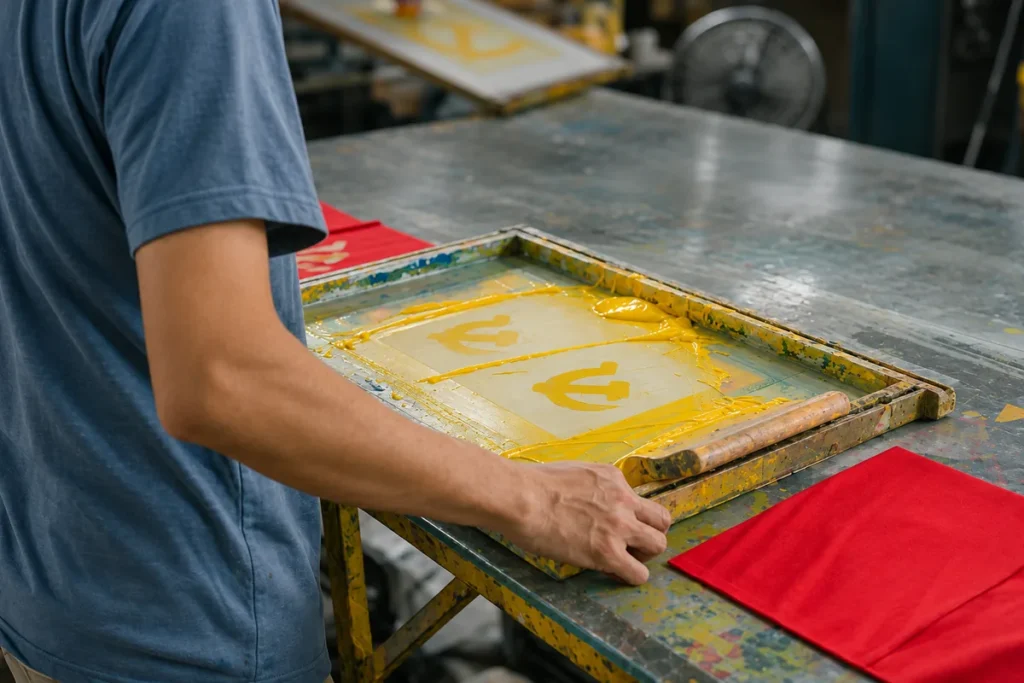
Screen printing, also called silk-screen printing, pushes ink through open areas in a mesh stencil. The garment sits on a flat support while a squeegee moves ink across the screen.
A separate screen is generally prepared for each ink color. The printer aligns the screens, applies the design, and cures the ink under controlled conditions. That preparation helps explain why a small order can cost more per shirt than a larger run of the same artwork.
For buyers, the advantage is repeatability. Once a design is set up, it can be reproduced across a run of company shirts, event apparel, or merchandise.
For staff shirts, school events, or team apparel, explore our custom screen printing services to see how your artwork can work across a coordinated order.
What Is Heat Transfer Printing?
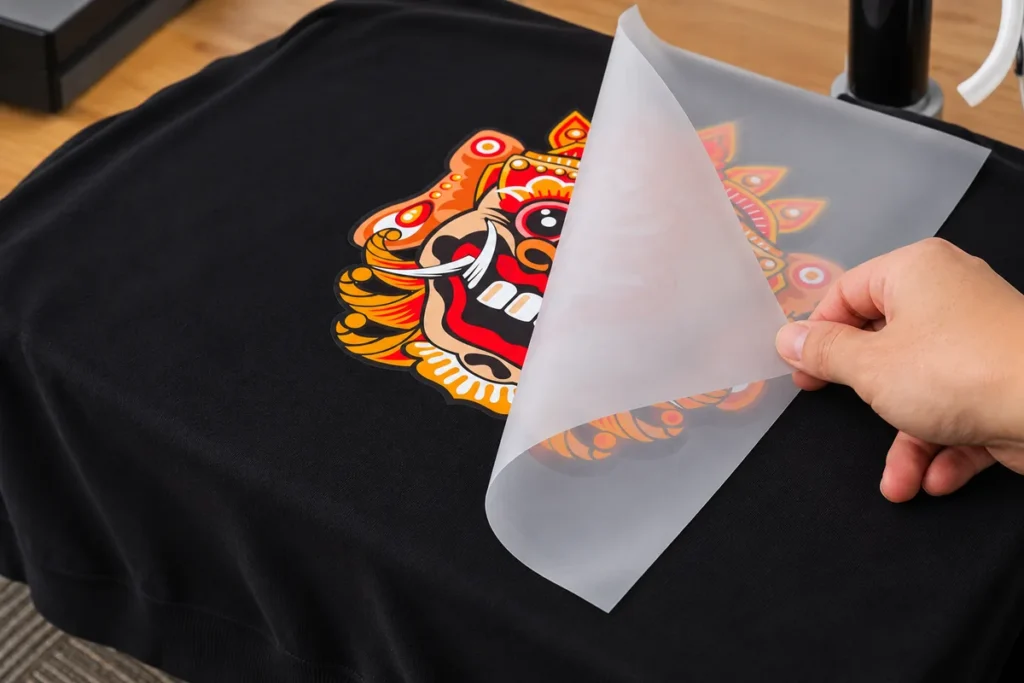
Heat transfer printing uses a heat press to apply a prepared design to a garment. The press supplies the temperature, pressure, and time required by the transfer material.
A heat press is equipment, rather than one specific printing technology. The result depends on what is being applied.
Heat Transfer Vinyl (HTV) for Lettering and Simple Designs
With standard cut HTV, a cutter shapes the design from colored material. Excess material is removed through a process called weeding, and the remaining design is pressed onto the garment.
This makes HTV useful for player numbers, employee names, and straightforward graphics. Multiple colors may require separate pieces or layers, adding preparation time. Printable vinyl is another option, with a different workflow.
Direct-to-Film (DTF) Transfers for Detailed, Full-Color Artwork
DTF printing produces artwork on a special film. An adhesive powder is added and cured before the transfer is heat-applied to the garment.
Because the artwork is printed digitally, DTF can reproduce multicolor illustrations, gradients, and photographic designs without preparing a screen for every color. It can be a practical option when a small order includes complex artwork.
Our DTF printing services are worth considering when your design includes fine details, several colors, or variations between garments.
Screen-Printed Transfers Applied With a Heat Press
Screen-printed transfers combine screen printing with heat application. The design is screen-printed onto a release carrier, then transferred to the garment using a heat press.
These products are useful to understand because they challenge the idea that every heat transfer is simply vinyl. Some use real plastisol ink and can provide a finish associated with screen printing.
Screen Printing vs Heat Transfer Cost: What Affects Your Price?
A useful price comparison starts with the same garment, artwork, print dimensions, and quantity. Otherwise, a cheaper quote may describe a different finished product.
Order Quantity and Setup Charges
Screen preparation creates an upfront cost that can be spread across more garments.
For example, preparing a two-color design for 25 shirts can involve much of the same screen work as preparing it for 250. With more shirts, that preparation represents a smaller share of each finished garment’s price. The work may be priced separately or included in the quote.
Transfers can avoid separate screen preparation for each design color, but they still involve materials, preparation, and pressing labor. Some transfer suppliers also offer quantity discounts.
There is no universal point at which screen printing becomes cheaper. Compare quotes for your actual order.
Design Colors, Print Size, and Placement
A small, one-color chest logo is a different job from a large front illustration with a second design on the back.
For screen printing, more ink colors and print locations can increase setup and production work. Transfer pricing may depend on dimensions, material, sheet usage, and application time.
Ask whether the price includes every print location shown in your artwork.
Personalization and Repeat Orders
Individual names and numbers change the economics. A shared company logo may suit screen printing, while employee names can be added separately using an appropriate transfer.
For reorders, ask about minimum quantities, artwork retention, setup charges, and garment availability. Keeping an approved design on file does not necessarily mean a small repeat order will receive the original bulk price.
Screen Printing vs Heat Transfer: Durability, Feel, and Print Quality
The finished print matters more than the method’s label. A sample can tell you more about comfort and appearance than a broad promise about quality.
Wash Durability, Cracking, and Peeling
Screen printing and professional heat transfers can both produce durable decoration. Performance depends on the specific ink or transfer, garment compatibility, correct application, and washing conditions.
Be cautious about fixed wash-life claims unless they relate to a named product and documented testing. A home laundry cycle is also different from industrial laundering.
Follow the decorator’s care instructions alongside the garment label. Common recommendations include washing inside out, using suitable detergent, and avoiding excessive heat or treatments that the decoration cannot tolerate.
For frequently washed uniforms, describe the expected laundry conditions before approving production.
Softness, Breathability, and Print Coverage
A small logo and a solid print covering most of a shirt’s front will feel different, even when produced with the same method.
Water-based screen-printing inks can create a soft finish on suitable fabrics. Plastisol and transfer materials can also vary considerably in thickness and feel.
For warm-weather event shirts or active staff, consider the design itself. Open areas and smaller printed sections leave more fabric uncovered. Ask to handle a sample with a similar print size rather than judging from a small swatch.
Brand Colors, Fine Details, Photos, and Gradients
Spot-color screen printing offers control over solid logo colors. DTF and other digital transfers are useful for artwork containing many colors and tonal detail.
Screen printing can also reproduce photographs and gradients through techniques such as halftones and simulated-process printing. The extra artwork preparation and production requirements need to make sense for the order.
If exact brand color matters, provide a color reference and discuss the approval process. A logo displayed on a phone screen is not a reliable physical color standard.
Which Printing Method Works Best on Your Fabric?
Choose the garment and decoration together. A method that works well on a cotton T-shirt may need different materials or settings on a performance polo.
Cotton and Cotton-Blend Shirts
Cotton shirts are commonly used for screen printing, HTV, and DTF. Blends also offer several decoration options, but the fiber composition still matters.
Tell the printer the exact garment model. “Cotton blend” could describe fabrics with substantially different polyester or stretch content, which can affect the recommended process.
Polyester and Performance Apparel
Polyester requires attention to heat exposure and dye migration. Under certain conditions, garment dye can move into the decoration and discolor it. This can affect screen prints and heat transfers.
Suitable inks, dye-blocking materials, lower-temperature processes, and testing may be needed. A transfer should be selected for the garment rather than assumed suitable because it works on another polyester shirt.
Stretch Fabrics and Heat-Sensitive Garments
Athletic clothing needs decoration that can move with the fabric. Standard materials may not provide enough stretch, and excessive heat can mark some garments.
Specialist options exist. For example, some screen-printed transfers are designed for lower-temperature application and stretch on polyester.
For an unfamiliar garment, request an application test before committing the full order.
Should You Choose Screen Printing or Heat Transfer?
Use quantity, artwork, personalization, and garment requirements together. One factor rarely tells the whole story.
Bulk Company Uniforms and Event T-Shirts
Imagine 250 cotton shirts with the same two-color logo. Direct screen printing is worth quoting because the artwork repeats and setup can be spread across the run.
Compare suitable transfer options too if print size, garment selection, or delivery requirements change the economics.
Small Batches and Detailed Promotional Designs
Now consider 18 shirts featuring a detailed campaign illustration. A digital transfer such as DTF may avoid the screen preparation needed for a multicolor design.
Review a sample for detail, color, and feel, particularly if the artwork covers a large area.
Personalized Names, Numbers, and Individual Garments
For a team order with a shared logo and different names, a combination may make sense: one process for the common artwork and another for personalization.
Check name spellings, number sizes, and placement carefully. A correct production method cannot fix an incorrect roster.
What Should You Send Your Printer for an Accurate Quote?
Send these details together:
- Garment: Product model, color, fabric, and size breakdown.
- Quantity: Total pieces and any design variations.
- Artwork: Original files, preferably vector artwork for logos where available.
- Print size: Intended dimensions rather than “large” or “small.”
- Placement: Front, back, sleeve, or another location.
- Personalization: Names, numbers, and which garments receive them.
- Use and care: Everyday uniforms, occasional events, sports, or demanding laundry conditions.
- Deadline: The date the finished order must arrive.
Brand New Promotions helps businesses, schools, teams, and organizations across North Texas plan custom apparel orders. Share your garment choice, artwork, quantity, and deadline, then review the recommended decoration method and final layout proof before production.
Request a custom apparel quote to discuss a printing option that fits your design, fabric, and budget.
Frequently Asked Questions About Screen Printing and Heat Transfer
Is Heat Transfer the Same as Sublimation?
Sublimation is one heat-transfer process, but it works differently from HTV or DTF. Heat turns sublimation dye into gas that colors compatible material rather than attaching a vinyl or adhesive-backed graphic.
For conventional apparel sublimation, white or light-colored polyester provides the best results. Standard sublimation is not a direct substitute for printing an opaque logo onto a dark cotton shirt.
Can Screen Printing and Heat Transfers Be Combined on One Shirt?
Yes. A shared logo can be screen-printed while individual names or numbers are heat-applied elsewhere. The printer should confirm material compatibility, placement, and the production sequence.
Can Both Methods Print on Dark Shirts?
Yes, with suitable materials and artwork preparation. Screen printing may require an underbase, while transfers need appropriate opacity. Review the result on the actual garment color, especially for pale logo colors.
Which Method Is Faster for a Small Order?
A ready-to-apply transfer can reduce production setup for a small batch. The full turnaround still includes garment availability, artwork approval, transfer production or delivery, and the decorator’s schedule. Confirm the arrival date rather than assuming every heat-transfer order is faster.
Can You Reorder Just a Few Matching Shirts Later?
Often, but minimums, pricing, garment stock, and production availability vary. Keep the approved artwork, garment details, print dimensions, and color references. Ask how small replacement orders will be handled before placing the first bulk order.
If your team will need regular additions, include those future orders in the initial discussion. The best printing choice should work for the first delivery and the replacements that follow.