The benefits of using a local screen printer go beyond getting custom shirts made. You can discuss your design face to face, review details more directly, and address issues with the people producing your order. That hands-on communication can make a difference when your apparel needs to represent your team or brand well.
Online ordering can be convenient for straightforward projects. But when appearance matters, you may want a clear view of how the shirts will look and confidence that the design, colors, and print placement suit your plans.
This article explains how working with a local printer can help with design collaboration, production planning, and coordinating apparel for an event or team. It also covers when screen printing is a good fit and when DTF printing or another digital method may better suit a detailed design. Use these practical considerations to weigh convenience against communication, consistency, and the impression you want your brand to make.
Key Takeaways
- Match screen printing to apparel that needs a bold, consistent design, especially when the artwork uses a limited number of colors.
- Plan color choices around your brand guidelines and the separate screen needed for each design color.
- Use in-person collaboration to review design details and address production questions directly.
- Choose an approach that suits the artwork, as printing methods can vary in how well they handle different designs.
Print durability and wash resistance
A team shirt may be worn at weekly practices, community events, and staff days. Screen printing creates a print by pushing ink through a mesh stencil onto material. Its ink layers are known for resisting fading, peeling, and weathering, helping apparel stay presentable through regular use. That durability supports a consistent brand impression whenever employees or team members wear the design.
Print quality depends on the artwork and production choices, including screen mesh, ink, and setup. A bold school mascot, for example, may work well as a clear, solid print, while fine lines require careful preparation. Screen printing can reproduce detailed artwork, but the design still needs to suit the process. Matching the method to the artwork helps preserve clarity and color.
Wash resistance matters when shirts become part of a regular uniform or spirit-wear rotation. Repeated washing puts a print through friction and handling, so care instructions should guide how each garment is cleaned. Turning a shirt inside out before washing can reduce direct contact between the printed surface and other items. A screen-printed staff shirt, for instance, needs the same thoughtful care as any frequently worn apparel.
Outdoor use brings another durability test. Screen printing’s ink layers resist weathering, making the method useful for outdoor products such as banners and signs. A community event banner needs its message to remain visible through repeated use. The material, placement, and exposure all shape how a printed piece performs, so consider where it will appear before selecting the design and substrate.
For a consistent group order, review the artwork, print placement, and garment materials together. A logo repeated across volunteer shirts should look intentional and remain easy to read. Screen printing suits designs that work well with the process; photographs and complex gradients are often better suited to digital printing. Choosing a method that fits the artwork helps protect clarity and brand recognition.
Brand customization and color matching
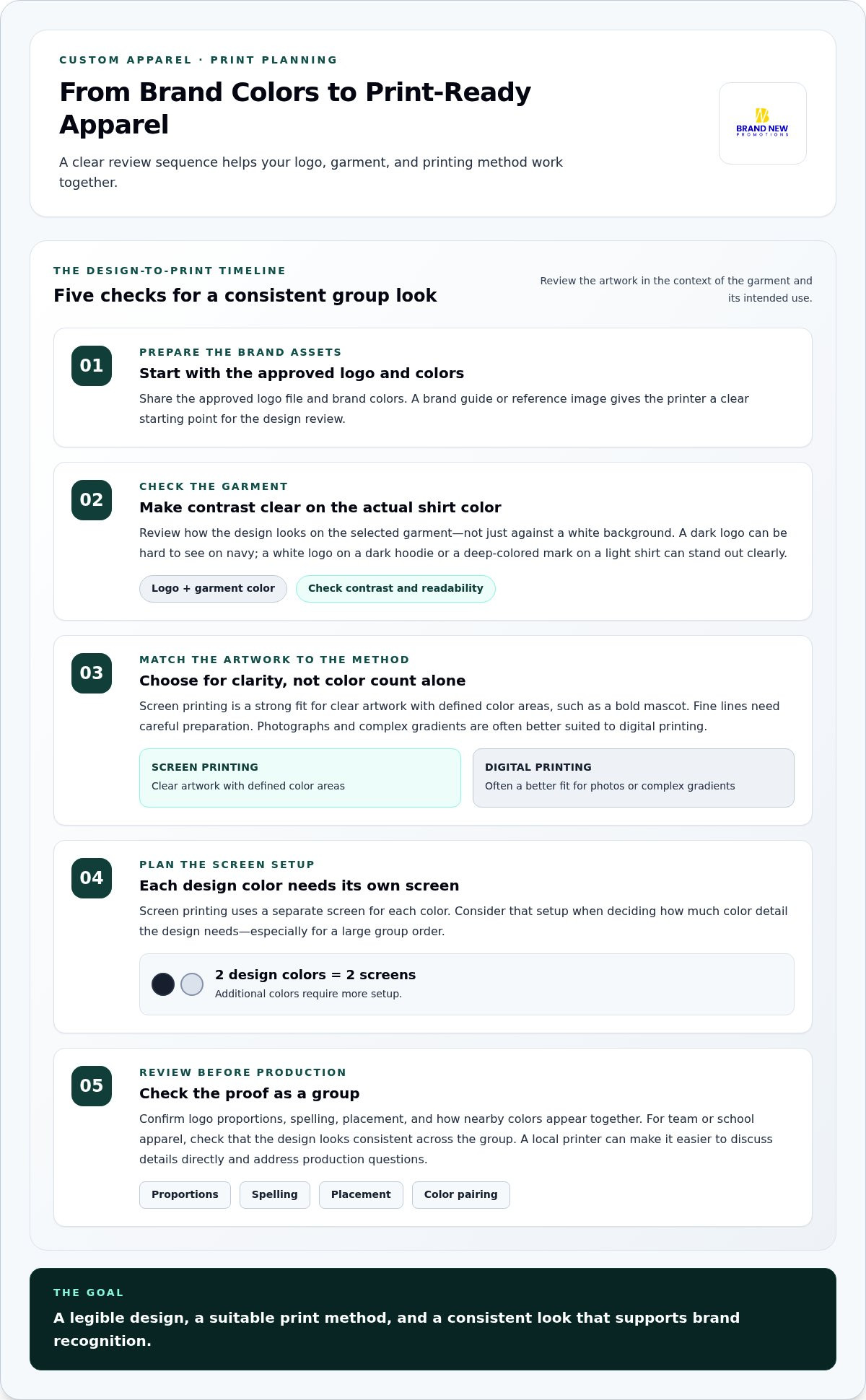
A logo on custom apparel should connect visually with your other brand materials. Start with the approved logo file and brand colors, then check how the design looks on the selected garment. A dark logo, for example, may be hard to see on a navy shirt. Strong contrast helps keep the design legible and recognizable.
Screen printing typically uses a separate screen for each color in a design. A two-color promotional logo, for example, needs two screens, with additional colors requiring more setup. This is worth considering when planning an order: a design with fewer colors may be a practical choice for a large group. For smaller orders, weigh the added visual impact of extra colors against the setup involved.
Color choice affects contrast and readability. A bright design needs enough contrast with its background to stand out, especially from across a room or in event photos. Consider a white logo on a dark hoodie or a deep-colored mark on a light shirt. The garment, ink, and artwork should work together rather than compete for attention.
Share a reference image or brand guide and review the design proof before production. Check logo proportions, spelling, placement, and how adjacent colors appear together. A school ordering spirit wear, for instance, may need the same mascot colors across shirts for students and staff. A focused review helps prevent avoidable mismatches and supports a consistent look across the group.
Screen printing is a strong printing technique for clear artwork with defined color areas. It may be less suited to photographs or detailed gradients, where digital methods can reproduce more visual detail. Choose based on the artwork’s purpose, not color count alone. If you’re shaping a logo for custom apparel, start planning your branded apparel design with the intended audience and setting in mind.
Vibrant appearance and specialty inks
Ink choice shapes how a design looks on shirts, bags, and other promotional items. A bright mark on a dark shirt needs strong contrast to stay easy to see. Screen printing can accommodate many designs, but the artwork, fabric, and ink need to work together. Review the design in the context of the actual garment color, rather than judging it against a white background alone.
Some local screen printers use water-based or soy-based inks as eco-friendly materials. These options may suit a campaign where material choices are part of the brand story. For example, a community organization could consider them for volunteer shirts, then compare the printed look with its artwork and fabric. Ask what the chosen ink does to color and detail so the final design supports the message.
Specialty inks can create a distinctive finish. Metallic ink, where available, can add a reflective accent to a logo or event graphic. A small metallic detail may draw attention to an emblem, while a larger print can change the overall feel of a shirt. Match the effect to the purpose: a subtle accent may suit staff apparel better than a prominent decorative design.
Fabric and finish also affect the result. A smooth surface can show fine detail differently from a textured one, so match the artwork to the item before production. For a school fundraiser, a consistent print across shirts can help the group look unified in photos and at events. A distinctive finish may make promotional apparel memorable, but clarity should remain the priority.
Creative print options can expand your choices, but no effect suits every design or material. Start with the audience and setting, then decide whether vivid color, a metallic accent, or a simple print best supports recognition. A clear logo on a team shirt may serve its purpose better than extra effects that compete with the message.
Local screen printers versus online print-on-demand services
Online ordering can be convenient, while a local shop offers direct communication and product review. The right option depends on your design, timing, and need for hands-on input.
Choosing and Comparing Local Printers
Compare local printers by reviewing print samples, communication, production details, and how well their process fits your artwork. These factors matter because a shirt for a North Texas team must look right on the garment, not only on a screen.
Ask to see a physical sample and discuss the design before production. Local customers can visit a facility to inspect products, review samples, and address concerns directly. That access can help resolve a placement or color issue before a larger order is complete.
Common drawbacks include screen-printing setup that can make the method less economical for small orders, plus limited suitability for detailed gradients or photographs. Compare the design’s needs with the printing methods offered. Online orders may also involve shipping waits and a return process if an issue needs fixing. For environmental priorities, ask whether water-based or soy-based inks are available; some local printers use them.
Order Turnaround Time
A local printer may quote a turnaround a few hours or days longer than an online retailer. The actual schedule depends on artwork approval, design colors, order size, and production workload, so a simple one-color shirt and a complex multicolor design can follow different timelines.
Build time for design review and corrections into an event plan. For example, a school ordering shirts for a scheduled spirit day should approve the artwork early and share the event date when discussing production. Local communication can help address changes directly, while online orders may add shipping time.
Local printing’s advantages are strongest when in-person review and direct problem-solving matter more than the fastest quoted turnaround. Compare the full process, including sample review, design adjustments, shipping, and returns. To plan custom shirts around your artwork and schedule, start your custom apparel project.
BRAND NEW Promotions | Top Promo Supplier in North Texas: promotional products
BRAND NEW Promotions | Top Promo Supplier in North Texas helps businesses and organizations with promotional products and promotional marketing to build recognition and strengthen connections. Turn to the team when branded apparel needs to support a clear goal, such as welcoming employees, uniting staff at an event, or helping customers remember your brand.
For a coordinated team look, Embroidered Polo Shirts can carry a consistent brand mark at client meetings, school events, or community programs. Choose apparel based on who will wear it, where it will be used, and the impression you want to create. These details help connect the item to a broader branding effort.
Contact BRAND NEW Promotions to discuss branded apparel and promotional marketing for your organization in North Texas, or visit brandnewpromotions.com.
Make Your Next Apparel Project Count
The benefits of using a local screen printer matter most when the finished apparel has a clear purpose. Decide what you want people to feel or remember when they see it. A staff shirt can help create a shared identity, while event apparel can make your organization easier to recognize. That purpose can guide your design choices.
Before starting, bring together the people who know your brand and those who will wear the shirts. Agree on the message, artwork, and intended use. Planning these details helps connect the project to your broader goals, whether you’re building team pride or creating a consistent customer experience.
BRAND NEW Promotions brings promotional products and promotional marketing together with services such as Embroidery, helping organizations shape branded experiences around their goals. Ready to put your idea into motion? Contact BRAND NEW Promotions to start planning. Your next project can help your brand show up with purpose.
Frequently Asked Questions
What are the benefits of using a local screen printer?
A local screen printer can make repeat campaigns easier to manage because screen-printing artwork can be reused for future runs. For an annual fundraiser, keeping the approved logo and design details together can help maintain a familiar look. It also gives organizers a useful starting point when planning updated shirts, rather than rebuilding the campaign artwork from scratch each time.
How does a local screen printer compare with an online printing company?
The right ordering approach depends on how people will receive the apparel. A local printer can produce a coordinated batch for an event, while online print-on-demand may suit a campaign where participants order individually. For a company-wide launch, plan around a shared distribution point. If the group is spread across locations, consider how each person will receive their items.
How does working with a local screen printer make custom design changes easier?
Keep revisions organized so the final design reflects the team’s input. Choose one person to collect feedback, mark requested changes on a single artwork file, and identify the approved version. A school committee, for example, can separate essential corrections, such as a misspelled team name, from optional preferences. This helps avoid conflicting edits and delays.
What are the environmental benefits of using a local screen printer?
A local address alone does not guarantee a lower environmental impact. Consider garment sourcing, packaging, delivery, and whether the quantity matches actual demand. For a community event, collecting size requests before ordering can help avoid unused apparel. Local sourcing is one factor in a broader purchasing decision, not an environmental guarantee.