Dallas employee uniform programs give businesses a consistent way to outfit teams across roles and locations. Programs may use rental, lease, or direct-purchase models, depending on how uniforms are owned and maintained. Set shared appearance standards while allowing practical choices, such as fit and size.
That balance matters: employees need workwear suited to their duties, and customers should be able to recognize the team and its brand. This guide covers what uniform programs can include, why employers use them, and how to set standards that work across locations without making every choice rigid. It also explains how design, logo placement, and apparel management can create a polished, unified impression.
Key Takeaways
- Set clear apparel standards across locations, then allow practical choices in fit and sizing to support employee comfort.
- Compare rental, lease, and direct-purchase models based on who owns the uniforms and how the program will be managed.
- Match uniform materials and features to job tasks, workplace conditions, and the impression employees should make with customers.
- Plan for sizing support, exchanges, and regular program feedback so teams stay coordinated as needs change.
Balancing employee choice with brand consistency
Dallas employee uniform programs work best when shared brand standards leave room for employees’ day-to-day needs.
For Texas and federal uniform-cost questions, employers should assess the garments required and any proposed employee charges or payroll deductions. Have employment counsel review those policy details before implementation.
Sustainable options may include apparel made with recycled or organic fibers. For Dallas teams, pair those material choices with custom branding and a plan for continued use, so garments support team identity and responsible purchasing goals.
Brand Identity and Professional Appearance
A uniform is part of the experience customers associate with an organization. Define the impression each team should make, then set a few shared visual standards, such as approved colors and distinctions between customer-facing and behind-the-scenes roles. Invite employee feedback before finalizing the policy. This can surface practical concerns while keeping the overall appearance aligned with the brand.
Branded Apparel Sourcing
Sourcing decisions influence how the brand appears in daily work and how employees use their apparel. Compare fabric, garment purpose, and decoration methods with the work setting. A Dallas service team meeting customers outdoors, for example, may need different apparel from an indoor reception team. Consider care and regular wear alongside the visual consistency the organization wants.
Customization and Logo Placement
Customization can communicate more than a company name. Use a logo to connect teams to one identity, and add role details when they help customers know whom to approach. Keep the design legible and proportionate to the garment. Before production, review the artwork on the chosen apparel to make sure the colors, placement, and scale work together.
Businesses with multiple locations can reinforce brand recognition by using consistent uniform designs across locations. Uniforms can be customized with logos, names, or positions using emblem and embroidery services. A common design can preserve a recognizable appearance, while those details help identify the person or role within that shared brand presentation.
What Are Corporate Uniform Programs?
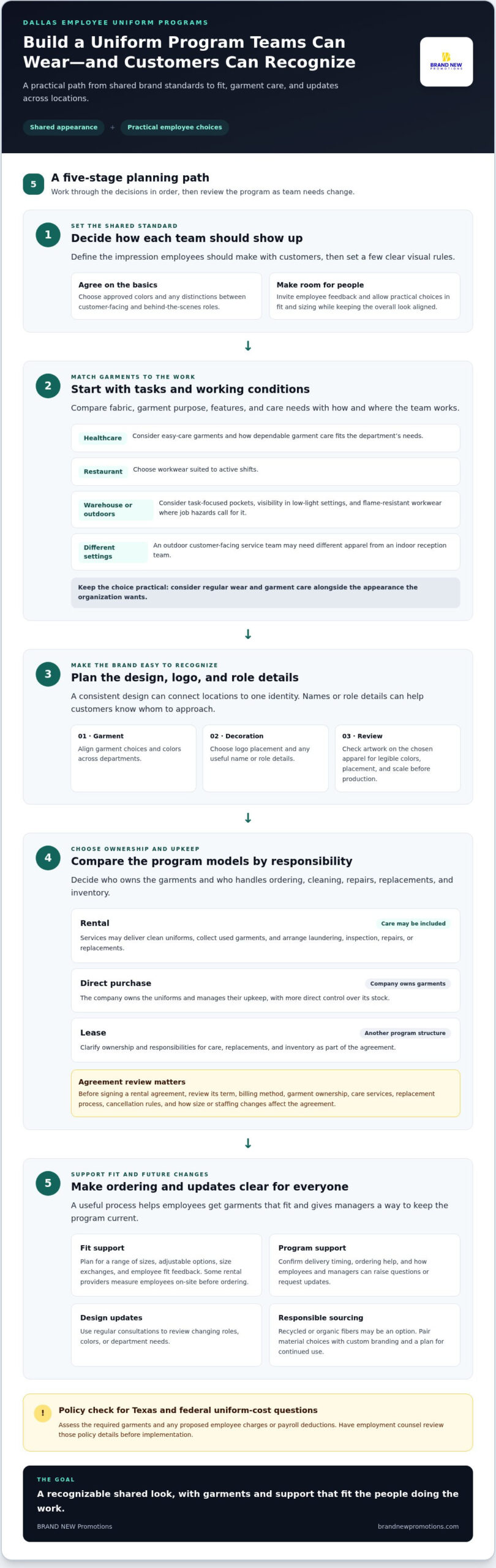
A corporate uniform program organizes how employees select, receive, and manage work garments. Dallas businesses can choose rental, lease, or direct purchase based on ownership and upkeep.
Rental services may deliver clean uniforms, collect used garments, and arrange laundering, inspection, repairs, or replacements. These services can help teams maintain workwear without managing each garment themselves.
Uniform Design, Fit, and Comfort
Design choices establish the program’s colors, garment types, and appearance standards. Start by matching garments to each department’s daily tasks. Healthcare teams, for example, may need different workwear from front-desk staff. Then consider fit, size options, and adjustable features for different body types. Comfortable garments encourage regular wear, while a clear design keeps teams recognizable.
Sizing Support and Program Management
Vendor support can help with sizing, ordering, and program updates. Some rental providers measure employees on-site before ordering. A useful process also explains how employees request size exchanges and give fit feedback. Timely delivery helps teams receive garments when needed, and regular consultations can support updates as roles, colors, or department needs change.
Ownership is another key choice. With direct purchase, the company owns the uniforms and manages their upkeep. Rental can include garment collection and care, while a lease offers another program structure. Compare options by who handles ordering, cleaning, repairs, replacements, and inventory. A healthcare department, for instance, may prioritize dependable garment care; another team may value direct control over its stock.
Map the design and ordering steps before launch. A clear brief can align colors, garment choices, and decoration across departments. Start a branded apparel project with those decisions outlined.
Before ordering, confirm how the program handles delivery, size exchanges, and consultation about updates or new designs. Consider these support details alongside the ordering process, so employees and managers know how to address fit questions and design changes.
A uniform rental company may measure employees on-site to determine fit before ordering. The program should offer a range of sizes and adjustable options for different body types. Keep these needs in mind when deciding what fit support the program should provide.
Why Should Companies Offer Employee Uniforms?
Uniforms can help employees feel part of an organization and help customers identify staff. For Dallas operations, choose apparel suited to the tasks, work setting, and customer interactions involved.
Before signing a rental agreement, review its term, billing method, garment ownership, care services, replacement process, and cancellation rules. Clarify any employee charges and how size or staffing changes affect the agreement.
Dallas organizations can use uniform rental providers for garment delivery and care, or branded-apparel providers for custom workwear. These are different program models: rental may include laundering and collection, while direct purchase leaves uniform ownership with the company.
Industry needs shape the right uniform. Healthcare teams may prioritize easy-care garments, while restaurant staff need workwear suited to active shifts. Warehouse and outdoor workers may need task-focused pockets or enhanced visibility in low-light settings. Where job hazards call for it, employers can consider flame-resistant workwear. Match each choice to the work, not just the organization’s preferred style.
Uniforms can make service easier to navigate. A visible company logo helps customers spot staff, while a name or role label can direct questions to the right person. In a large service area, for example, consistent, clearly marked apparel helps customers identify employees more quickly.
Build a simple decision process: list job tasks, identify workplace conditions, then choose garment features and styles. Consider machine-washable or stain-resistant fabrics where frequent cleaning matters. For rental, compare the included care and garment-handling steps. For direct purchase, plan who will track stock and arrange upkeep. These details affect daily operations and employees’ experience wearing the uniform.
Finally, connect the program to employee support. Employer-provided workwear can save workers the time and expense of buying work clothes while reducing wear on personal clothing. A well-matched uniform plan supports team identity and a consistent appearance during customer interactions.
Uniform management across locations and teams
A shared process helps each location order approved garments and manage replacements. Assign one program owner, then give location managers clear approval steps. This keeps corporate apparel aligned and makes local orders easier to track.
Start with a central uniform guide. Record approved styles, colors, logo placement, fabrics, and role-based options. A Dallas office and a warehouse team, for example, may need different garments while representing the same brand. Share the current guide with each location so older designs don’t reappear in new orders.
Set a simple employee ordering workflow:
- Employees choose from approved garments and sizes.
- A manager reviews role, size, and requested quantity.
- The program owner records the order and delivery status.
- The employee reports fit issues or damage through the same process.
An online ordering system can make this workflow easier to follow. Keep approved selections, sizing guidance, and approval rules together. A new employee, for instance, can select a role-specific shirt while a manager reviews the request. Clear steps reduce duplicate orders and prevent unapproved styles from spreading between teams.
Track stock by location and garment type. An inventory record can show what each team has, what employees need, and which items require replacement. Review it during onboarding and staffing changes, then update it after each order. If a logo or garment design changes, mark older stock and set a transition plan. This helps prevent mismatched apparel across customer-facing teams.
Choose an owner for each task: employees submit requests, managers approve them, and the program lead reviews stock and design changes. This division helps teams spot gaps before they affect daily operations. A structured branded apparel project can begin with those ordering rules, location needs, and replacement priorities.
BRAND NEW Promotions | Top Promo Supplier in North Texas: promotional products
BRAND NEW Promotions | Top Promo Supplier in North Texas helps organizations build a consistent brand identity through promotional products and promotional marketing. Turn to the team when planning branded garments and custom designs for a unified appearance in North Texas, including Plano, Frisco, Dallas, Wylie, Sherman, The Colony, Melissa, and Richardson.
For customer-facing teams, embroidered polo shirts can create a polished look and make your organization easier to recognize. Embroidery adds branded detail to apparel, connecting employee workwear with the wider brand experience. A consistent design can also support team pride across departments and locations.
Start by defining who will wear the apparel, where they’ll use it, and how the design should represent your organization. Then choose the visual direction and decoration to suit those goals. To discuss branded apparel for your North Texas team, contact BRAND NEW Promotions or visit brandnewpromotions.com.
Make Your Uniform Plan a Living Brand Touchpoint
A uniform program can grow with the organization instead of remaining fixed after launch. Treat it as a living brand touchpoint. As teams, roles, and customer needs change, review whether the apparel still reflects the experience you want people to have. This can help leaders spot gaps between the brand promise and employees’ daily appearance, while connecting apparel decisions to the culture they want to build.
Before the next rollout, create a short brief describing the look you want, the work situations apparel must support, and how employees can share feedback. Use it to guide updates and keep decisions connected to the brand, not just purchasing routines. A thoughtful Dallas employee uniform program can strengthen recognition while helping employees feel included in the organization’s identity.
Ready to shape branded apparel around your team and goals? Start a conversation with BRAND NEW Promotions | Top Promo Supplier in North Texas, and take the next step toward a consistent, confident brand presence.
Frequently Asked Questions
Which industries in Dallas use employee uniform programs?
Dallas employers use uniform programs in corporate offices, financial services, property management, schools, sports organizations, and nonprofits. An office may use branded apparel for client meetings, while an event team may need a clear identity for staff assisting guests. The right fit depends on whether uniforms help customers recognize employees, create a shared team presence, or support a professional impression.
What are the steps to set up a uniform program for a Dallas business?
Begin by deciding which employee groups are eligible and whether uniforms are required or optional. Select a program model, then document approved garments, employee responsibilities, and how garments are handled when someone changes roles or leaves. Test the policy with one team before expanding. Use feedback from that trial to refine the program and reduce rollout confusion.