Plano sublimation for polyester shirts uses heat and pressure to turn solid dye into gas, bonding the color with the polyester fibers. The design becomes part of the fabric rather than sitting on its surface, making sublimation a strong choice for colorful artwork on light-colored polyester apparel.
Choosing a print method affects how apparel looks and feels, and how well it represents your team or brand. This guide explains how sublimation works, which fabrics and coated surfaces suit it, and how it compares with screen printing and embroidery. You’ll also see when it works well for uniforms, spirit wear, and branded apparel, helping you match the method to your design and branding goals.
Key Takeaways
- Match the print method to your artwork and branding goal: full-color coverage calls for a different approach than focused logos or stitched details.
- Learn why sublimated designs become part of polyester fabric, creating a different feel from a print that sits on the surface.
- Choose fabrics and coated materials carefully, since the material and garment color affect how the finished design appears.
- Plan apparel around its purpose, from team identity to staff visibility, so garment choices support a consistent brand experience.
Sublimation compared with screen printing and embroidery
In Plano, Texas, polyester shirts can be sublimated through BRAND NEW Promotions’ sublimation printing service. The best method depends on the garment, artwork, and coverage you want.
Printing Method Comparisons
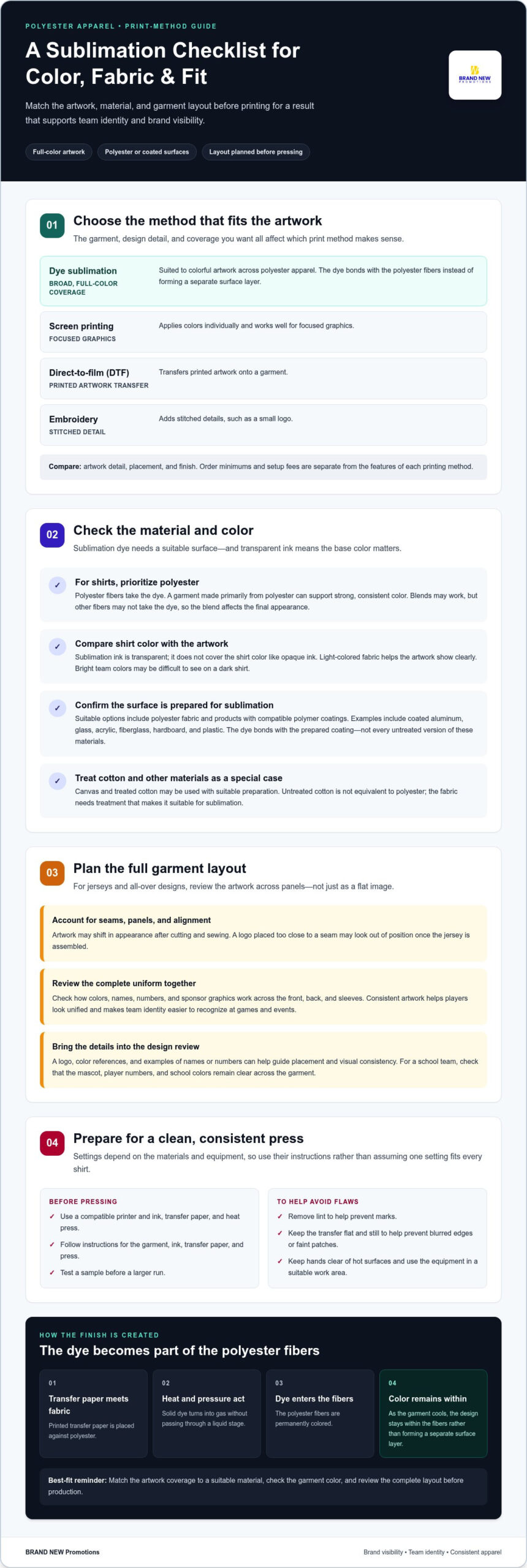
Dye sublimation suits full-color artwork and designs covering broad areas of polyester apparel. Screen printing applies colors individually and works well for focused graphics. Direct-to-film printing transfers printed artwork onto a garment, while embroidery adds stitched detail, such as a small logo. Compare the artwork detail, placement, and finish you want. Order minimums and setup fees are separate from the features of each printing method.
Polyester and Coated Material Options
Sublimation works on polyester fabric and products with suitable polymer coatings, such as coated aluminum, glass, acrylic, and plastic. Fabric blends and garment color affect how artwork appears, so consider both when choosing a shirt. Light-colored fabric helps transparent sublimation ink show clearly. For team orders, compare the shirt color with the artwork before approving the design.
Press Settings and Supplies
There is no single temperature or pressing time for every polyester shirt. The correct settings depend on the garment, ink, transfer paper, and press. Follow the instructions for the materials and equipment, and test a sample before a larger run. Sublimation requires a compatible printer and ink, transfer paper, and heat press.
Common defects include faint patches, blurred edges, and marks caused by lint or a shifting transfer. Remove lint and keep the transfer flat and still during pressing. Follow the heat press instructions, keep hands clear of hot surfaces, and use the equipment in a suitable work area. These steps help prevent avoidable flaws and support safer handling.
How sublimated designs bond with garment fibers
The process begins with printed transfer paper placed against polyester fabric. Heat and pressure turn the solid dye into gas without passing through a liquid stage. The dye enters and permanently colors the polyester fibers. As the garment cools, the color remains within the fibers instead of forming a separate layer on the surface.
Because the dye bonds within the fibers, the artwork feels different from a thick surface decoration. A large design across a jersey, for example, does not create the same raised surface. The fabric remains the main touchpoint, while the image becomes part of its fibers. This process also allows detailed color transitions and artwork across multiple garment panels.
All-over jersey designs need careful planning before printing. Artwork must account for seams, panels, and alignment after cutting and sewing. A logo placed too close to a seam may appear out of position once the jersey is assembled. Reviewing a full garment layout helps teams see how colors, numbers, names, and sponsor graphics work together.
In-person design assistance can help translate a team’s concept into a practical layout. Bring a logo, color references, and examples of names or numbers to discuss placement and visual consistency. For example, a school team can review whether its mascot, player numbers, and school colors remain clear across the front, back, and sleeves.
Think about the complete uniform, not just one printed panel. Consistent artwork can help players look unified and make team identity easier to recognize at games and events. If you’re ready to shape a jersey concept, start planning your apparel project with the artwork, garment layout, and team details in mind.
The process permanently dyes polyester fibers or products with a polyester coating, integrating the design with the garment’s feel.
Suitable fabrics and coated surfaces
Fabric composition affects how dye sublimation looks after printing. Polyester fibers take the dye, while other fibers in a blend may not. No single polyester-content threshold suits every shirt. Blended fabrics may work, but the blend affects the final appearance. For strong, consistent color, choose a garment made primarily from polyester.
Color matters, too. Sublimation ink is transparent, so it does not cover the shirt color like opaque ink. A light-colored polyester shirt lets the artwork show more clearly. For example, a white shirt can display bright team colors, while a dark shirt can make them difficult to see. Consider the garment color alongside the artwork before choosing apparel.
Canvas and treated cotton may also be used, but require suitable preparation. Untreated cotton is not equivalent to polyester for this method, which permanently dyes polyester fibers. To put a design on a cotton item, the fabric needs treatment that makes it suitable for sublimation. Match the material to the intended use before choosing a production method.
Sublimation also works on non-fabric items with a compatible polymer coating, including aluminum, glass, acrylic, fiberglass, hardboard, and plastic. The coating matters because the dye bonds with the prepared surface, not every untreated version of these materials. A coated aluminum sign, for example, can carry a full-color design when its surface is made for sublimation.
Use this quick selection process for shirts, banners, or branded surfaces:
- Identify the base material, such as polyester fabric, treated cotton, or coated glass.
- Check the garment’s color against the transparent ink and artwork.
- Match the project to its purpose, such as team apparel, a banner, or a coated display item.
These checks help align color, material, and brand artwork. For example, a uniform set benefits from consistent shirt fabric and color across the group.
Apparel products and garment categories
Start with the garment’s purpose. Staff shirts for a public event need clear brand visibility, while team uniforms should give players a unified look. A spiritwear design may focus on school colors and mascot artwork. These goals help determine the garment, artwork coverage, and placement before production begins.
Polyester shirts suit sublimation when the design calls for bright colors across broad areas. A team jersey might feature artwork in several locations, along with player names and numbers. A school spiritwear shirt might instead use a bold, full-color graphic. Plan each design around how people will wear and recognize the apparel.
Uniforms can be printed before the fabric is cut and sewn. This allows artwork to extend across garment panels instead of staying within one small print area. For example, a sports team can coordinate colors and graphics across the front, back, and sleeves. Reviewing the layout helps ensure key details land where intended after assembly.
Consider how the apparel program may grow. Teams can reproduce sublimated designs as they add players in future seasons. Consistent artwork helps returning and new members share the same visual identity. Keep a clear record of approved colors, names, numbers, and layouts to coordinate future additions more easily.
Timing also belongs in the apparel plan. Custom sublimated uniforms or apparel typically take 2-6 weeks after mockup approval. Build that production window into a school season, event date, or staff rollout. Approving the mockup promptly gives the production schedule a clear starting point.
Before finalizing a garment plan, align the audience, artwork, and use. A sports team may need names and numbers, while event staff may prioritize a recognizable logo. If you’re planning branded apparel, start shaping your apparel project with the intended use and design details in mind.
BRAND NEW Promotions | Top Promo Supplier in North Texas: promotional products
BRAND NEW Promotions | Top Promo Supplier in North Texas helps businesses connect branded apparel and promotional products to clear marketing goals. Turn to the team when you’re planning an employee apparel program, a customer event, or a consistent brand presence across multiple touchpoints.
For a polished staff look, Embroidered Polo Shirts can feature a company logo for everyday work or event teams. Embroidery also helps organizations keep apparel consistent with their broader promotional marketing. The right choice depends on your audience, setting, and the impression you want people to remember.
Share your project goals, audience, and artwork direction to start shaping a coordinated plan. For questions or to discuss your needs, contact BRAND NEW Promotions or visit brandnewpromotions.com.
Turn Your Apparel Idea Into a Brand Experience
Branded apparel works best when it supports a broader experience, not just a single shirt. A coordinated look can help staff feel connected, give teams a shared identity, and make your organization easier to recognize at events. Start by deciding what you want people to notice, remember, or feel when they see your apparel.
Plano sublimation for polyester shirts can be one part of that plan. Serving North Texas, including Plano, Frisco, Dallas, Wylie, Sherman, The Colony, Melissa, and Richardson, BRAND NEW Promotions | Top Promo Supplier in North Texas also offers promotional products, promotional marketing, and embroidery to help organizations create connected brand experiences across different touchpoints. The right mix depends on your audience, setting, and the impression you want to build.
Bring your goals and design direction together before production begins. Start planning your branded apparel project with BRAND NEW Promotions. A clear idea is a strong first step toward apparel people are proud to wear and others remember.
Frequently Asked Questions
What is dye sublimation?
Dye sublimation applies custom artwork to compatible items. For your project, decide whether the design needs a consistent color system across shirts, uniforms, or display pieces. Prepare clean artwork and identify key details, such as sponsor marks or player names, before approving a layout. This planning helps keep the brand presentation consistent across the order.
What materials benefit most from going through the process of dye sublimation?
Polyester apparel and specially prepared coated goods are suitable candidates. Choose based on the item’s role: matching shirts can unify event staff, while a coated display piece can carry the same visual identity at a booth. Consider the item’s shape, use, and visible area alongside the design. This helps ensure the branding works in its actual setting, not just in a digital mockup.
What is sublimation printing on polyester shirts?
Sublimation customizes polyester shirts for teams, events, and branded staff wear. For Plano sublimation for polyester shirts, gather sizes, approved names, number assignments, and the final logo file before production. Check spelling and placement against one roster, then review the garment mockup as a group. Preparation helps prevent personalization mismatches and supports a consistent team appearance.
How does sublimation compare with screen printing, DTF, and heat transfer vinyl for polyester shirts?
Each method suits different artwork and garment plans. Compare the desired coverage, finish, artwork detail, and whether names or numbers vary by wearer. Teams with individualized player details should plan personalization early. Campaigns using one repeated logo can focus on consistent placement and visibility. These priorities help narrow the choice to a method that fits the apparel’s purpose and brand goals.
How to sublimate a polyester shirt step by step?
Print the design on transfer paper with compatible sublimation ink, place it against the polyester shirt, and press it using settings suited to the materials and equipment. Keep the transfer flat and still, then let the garment cool so the dye remains in the fibers.