What if the quickest way to weaken your brand’s image isn’t a missed deadline, but laundry day? You invest in custom apparel to unite your staff and build lasting recognition, so seeing sharp company logos crack, fade, or peel after just two washes is deeply frustrating. Proper garment care protects ink elasticity and preserves your organization’s polished look. Understanding how to care for screen printed shirts ensures your branded gear delivers real value every time someone wears it.
You don’t need commercial equipment or complicated routines to keep your gear looking fresh off the press. In this guide, you’ll learn the exact washing, drying, and storage steps required to keep your custom screen printed shirts vibrant and crack-free. We’ll also outline a simple laundry protocol you can share with employees and team members, helping you protect your branding investment across dozens of wash cycles.
Key Takeaways
- Identify the mechanical and thermal causes of print degradation to protect the physical bond between fabric fibers and cured ink.
- Master a reliable routine on how to care for screen printed shirts using cold water cycles that prevent cracking and fading.
- Learn why high dryer heat distorts custom graphics and how proper air-drying preserves the original fit of your apparel.
- Implement clear garment care guidelines across your team to extend uniform lifespans and protect your organization’s branding investment.
Why Screen Printed Shirts Crack, Peel, and Fade Over Time
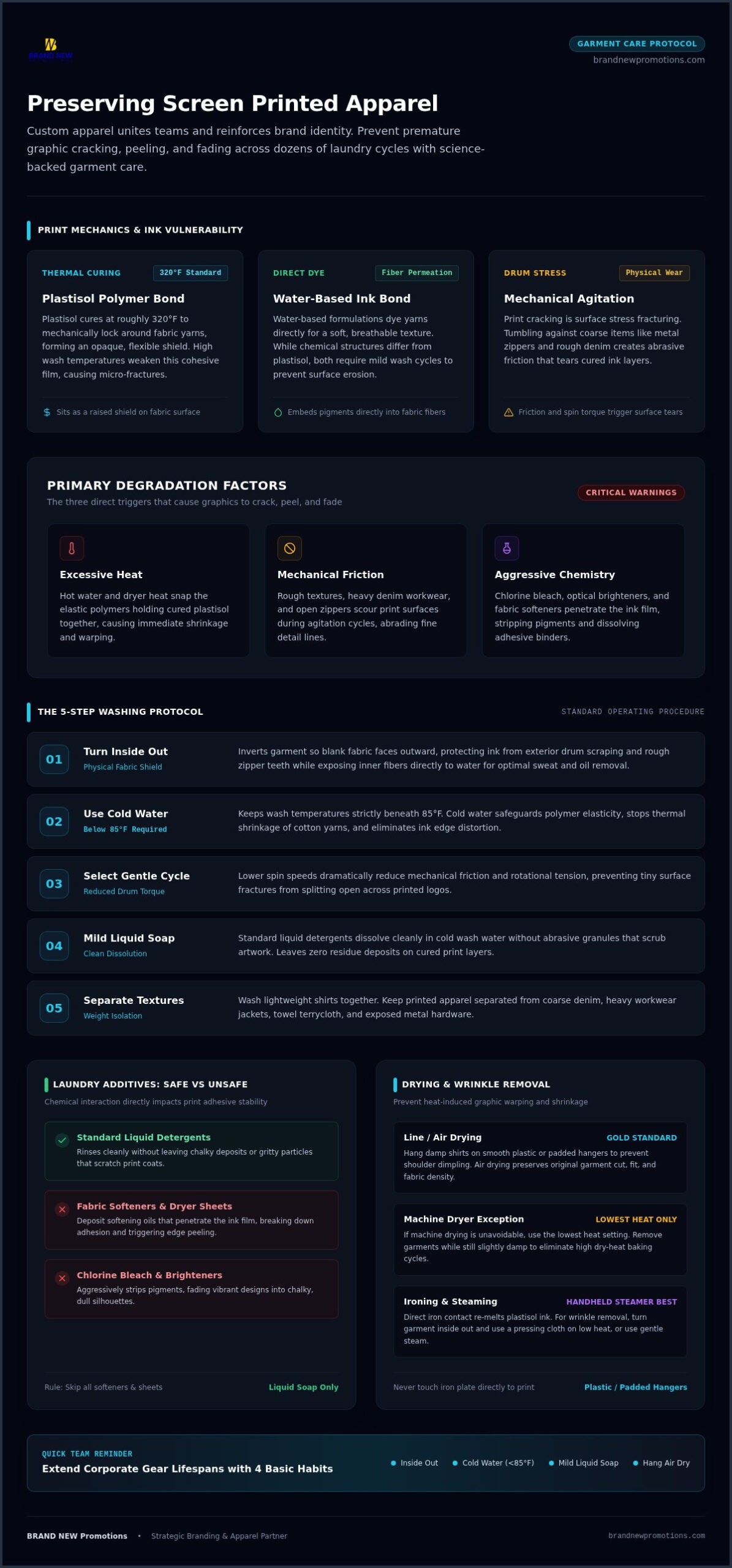
Print cracking is mechanical stress fracturing the surface of heat-cured plastisol. During production, commercial screen printing cures ink at roughly 320°F to physically lock it around fabric fibers. When reviewing what is screen printing, the finished ink creates a flexible, cohesive film. High wash temperatures weaken this bond, while the relentless mechanical agitation inside washing drums triggers microscopic tears across cured ink surfaces.
Understanding Plastisol vs. Water-Based Ink Bonds
Plastisol ink sits on top of fabric yarns, creating an opaque, slightly raised shield that relies on polymer flexibility. Water-based inks dye the yarn directly, making the graphic feel naturally soft and breathable. While their chemistry differs, both ink varieties require gentle laundering to prevent premature surface degradation and keep team logos crisp.
The Three Biggest Enemies: Heat, Friction, and Harsh Chemicals
Mastering how to care for screen printed shirts requires eliminating three common laundry hazards:
- Excessive heat: Hot water cycles relax and snap the elastic polymers holding cured ink together.
- Mechanical friction: Rough fabrics like denim or heavy workwear abrade printed surfaces during agitation cycles.
- Aggressive chemistry: Chlorine bleach and optical brighteners strip pigments, leading to dull, faded designs.
Shielding your custom garments from these triggers keeps corporate merchandise vibrant through dozens of wear cycles.
How to Wash Screen Printed Shirts: A 5-Step Protocol
Establishing an exact washing routine keeps your custom designs crisp across dozens of wear cycles. Follow this reliable five-step protocol every laundry day:
- 1. Turn garments inside out: Create an immediate fabric barrier that shields the face of the print.
- 2. Use cold water: Set wash temperatures below 85°F to maintain ink elasticity.
- 3. Pick the gentle cycle: Lower spin speeds cut down on drum friction and torque.
- 4. Add mild liquid soap: Standard mild formulas dissolve cleanly without scrubbing the artwork.
- 5. Separate by texture: Wash lightweight shirts together and keep them away from coarse denim and open zippers.
Why Turning Garments Inside Out Prevents Surface Damage
Inverting your shirt transforms the blank cotton back into a protective shield. Heavy metal zippers, jagged teeth, and stiff buttons easily scratch exposed graphics during agitation. Flipping the garment protects delicate ink details from exterior drum contact. It also exposes the inner fabric directly to soapy water, removing oils and sweat effectively.
Choosing the Right Detergent and Avoiding Softeners
Standard liquid detergents dissolve smoothly in cold water, rinsing away completely without leaving gritty deposits behind. Skip liquid fabric softeners and dryer sheets entirely. These products deposit softening oils that penetrate the ink film, weakening adhesion and causing edges to peel.
Knowing how to care for screen printed shirts ensures your investment endures, but long-term durability also depends on commercial print standards. If you are preparing new gear for your team, connect with our branding specialists to build apparel designed to last.
Drying and Ironing Guidelines to Prevent Graphic Warping
High dryer heat is the single fastest way to shrink cotton and distort printed designs. When high temperatures contract knitted yarns unevenly, the cured ink puckers, warps, and separates from the surface. Understanding how to care for screen printed shirts during post-wash drying protects the structural integrity of both your apparel and your company’s visual identity.
Air Drying vs. Low-Heat Machine Drying
Line drying is the gold standard for decorated apparel. Air drying preserves original garment dimensions, protects fabric density, and prevents heat-induced graphic warping. Hang damp garments on smooth plastic or padded hangers so the fabric won’t stretch or develop dimples at the shoulders. If tight deadlines require machine drying, use the lowest heat setting available. Pull shirts out while they’re still slightly damp to eliminate excessive heat exposure.
Safe Wrinkle Removal Without Melting the Print
Plastisol ink re-melts when exposed to direct dry heat. Touching an iron plate directly against your graphic will smear the design and ruin your iron. When crisp presentation is necessary for a client presentation or trade show, turn the garment inside out, use low heat, and place a pressing cloth between the fabric layers. For faster and safer smoothing, use a handheld garment steamer. Gentle steam relaxes wrinkles without applying scorching contact heat.
Ready to outfit your team with durable screen prints that endure regular laundering? Launch your apparel project with our production experts today.
Maximizing Apparel Lifespan for Team Uniforms and Corporate Merch
Branded apparel is a walking representation of your organization’s standards. When staff members wear cracked or faded gear, it weakens the professional image you worked hard to build. Educating your crew on how to care for screen printed shirts turns routine laundering into brand protection. Include a simple care card in new hire onboarding kits to set clear expectations from day one.
Proper Storage Practices for Bulk Company Apparel
Managing surplus uniform inventory requires intentional storage habits. Never cram excess apparel into crushed cardboard boxes or humid storage closets. Moisture invites mildew and breaks down natural cotton elasticity before an employee ever wears the shirt. Fold garments neatly and store them in sealed plastic bins inside a climate-controlled room away from direct UV sunlight. When organizing a large order, review our bulk screen printing guide to select resilient blank garments that hold their shape over time.
Starting With Commercial-Grade Print Curing
Home care preserves your apparel, but long-term durability starts on the production floor. Upwards of 90% of premature print failures stem from improper manufacturing rather than consumer laundering mistakes. Industrial conveyor dryers must heat the plastisol ink to roughly 320°F throughout the entire ink film to create a permanent bond with the fabric. Combine precise curing with premium base garments, and your logos will maintain clean dimensional stability across dozens of wash cycles. Partner with BRAND NEW Promotions to design custom corporate merchandise engineered for lasting impact.
Protect Your Brand Identity With Better Garment Care
Your custom gear does more than clothe your team; it broadcasts your organization’s standard of excellence every single day. Knowing how to care for screen printed shirts ensures every graphic stays bold, sharp, and completely crack-free. Inverting garments before washing, choosing cold water cycles, and skipping high dryer heat are simple habits that protect your apparel investment across dozens of washes.
Lasting durability starts with expert production. BRAND NEW Promotions provides full-service apparel customization built for professional brands throughout Dallas, Plano, Frisco, and surrounding communities. We rely on commercial-grade conveyor curing so every graphic bonds permanently to the fabric, ensuring your merchandise withstands heavy daily wear. When you combine commercial craftsmanship with smart laundry habits, your organization’s visual identity remains flawless. Build durable custom apparel that lasts with BRAND NEW Promotions and showcase your team with total confidence.
Frequently Asked Questions
Can I wash screen printed shirts in warm or hot water?
No, you should always avoid washing screen printed shirts in warm or hot water. High temperatures relax and degrade the cured plastisol ink bond, accelerating premature cracking and fading. Hot water also shrinks natural cotton fibers, pulling and warping the graphic. Sticking to cold water cycles below 85°F maintains polymer elasticity and preserves vibrant colors while still keeping your team apparel completely clean.
What happens if you accidentally dry a screen printed shirt on high heat?
High dryer heat causes the garment fabric to shrink rapidly while scorching the cured ink layer. This sudden temperature shock pulls the graphic unevenly, creating immediate wrinkles, puckering, and micro-cracks across the artwork. Understanding how to care for screen printed shirts means keeping them out of hot tumble dryers. If an accidental cycle happens, let the shirt cool flat immediately to help stabilize the print.
How do you get wrinkles out of a screen printed shirt safely?
The safest way to remove wrinkles is by using a handheld garment steamer from a few inches away. Steam relaxes the cotton yarns without transferring direct heat to the printed artwork. If you only have a traditional iron, flip the shirt inside out and place a clean cloth over the design. Use low heat and keep the iron moving continuously to avoid scorching the plastisol graphic.
Can you use stain remover directly on screen printed graphics?
No, you should never apply concentrated stain removers directly onto screen printed graphics. Harsh spot cleaners and heavy solvents dissolve ink polymers, triggering discoloration, flaking, or edge peeling. Apply stain treatments strictly to the unprinted fabric surrounding the mark. Gently dab the affected spot with a damp microfiber cloth instead of scrubbing across the artwork, then wash the shirt in cold water using gentle detergent.
Why is my screen printed shirt peeling after the first wash?
Peeling after the first wash almost always points to under-cured ink during the printing process. While learning how to care for screen printed shirts protects their surface, the ink must hit approximately 320°F during production to fuse permanently with fabric fibers. If conveyor heat was insufficient, prints lift immediately. Reputable partners like BRAND NEW Promotions ensure every batch is thoroughly cured to prevent unexpected wash failures.